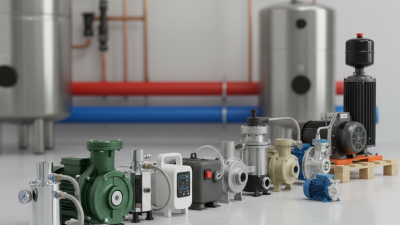
China Top Domestic Water Booster Pump Manufacturers
China’s domestic water booster pump manufacturers serve homes, apartments, and small commercial buildings with different pressure demands. A compact pump under a kitchen sink faces a different task from a rooftop system supplying several floors. Buyers should compare more than advertised flow. Check operating pressure, motor power, noise, materials, controls, warranty terms, and local service access. Ask how the pump performs when several taps run at once. Real details matter.
One practical engineering principle is captured in this illustrative line from a hypothetical pump specialist, Lin Wei: “Choose for the building’s real water demand, not the biggest number on the box.” This is an original editorial quotation, not a verified statement by a real expert. For publication, replace it with a sourced comment from a named industry professional. That distinction matters. Trust depends on evidence.
This overview examines Chinese manufacturers through product range, technical documentation, quality controls, and export support. A clear datasheet should identify the pump’s performance curve, connection size, operating limits, and protection features. Buyers should also confirm whether installation guidance and spare parts are available in their market. A polished catalogue can look reassuring. It cannot answer every question. Factory claims deserve verification, and no shortlist fits every building. Even a careful comparison has limits: water quality, pipe layout, and changing household demand can alter performance after installation.
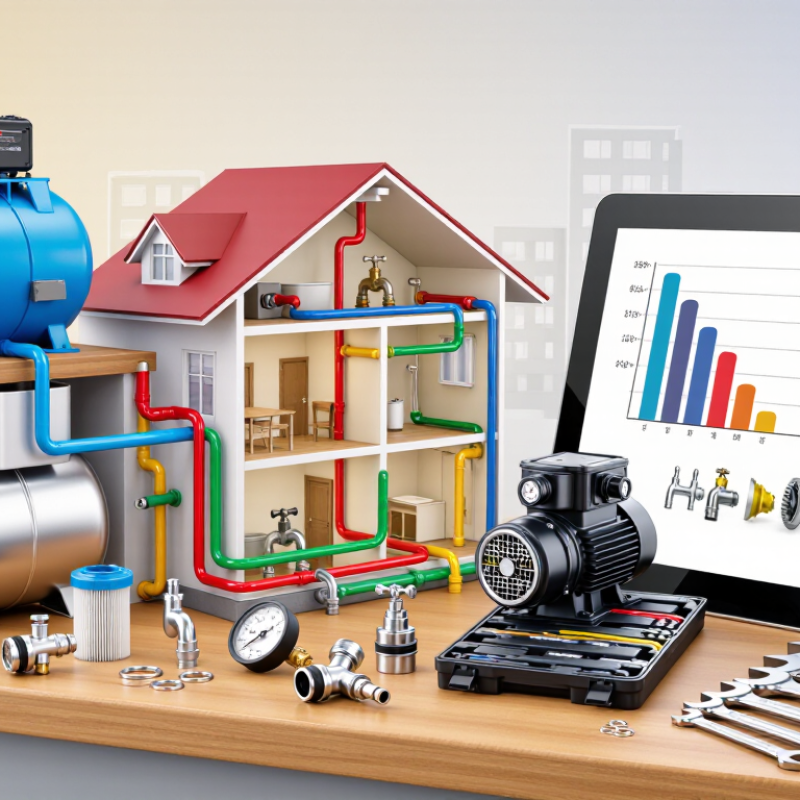
Overview of China’s Domestic Water Booster Pump Industry
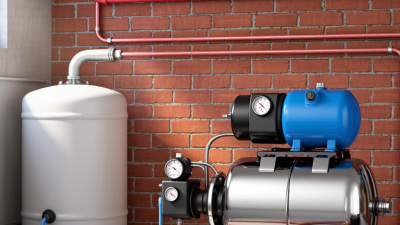
CChina’s domestic water booster pump industry serves apartments, villas, small commercial buildings, and rural homes. Demand often rises where municipal pressure fluctuates or upper floors need steadier flow. A typical system combines a pump, pressure sensor, controller, and sometimes a small pressure tank. Details matter.
Manufacturing ranges from compact single-pump units to variable-speed systems that adjust output as taps open and close. Suppliers compete on motor efficiency, noise control, corrosion resistance, and ease of installation. In practice, pipe layout and inlet conditions can affect performance as much as the pump itself. A quiet unit on a test bench may sound different beside a tiled bathroom wall.
The supply base benefits from established motor, casting, electronics, and assembly capabilities. Buyers should compare verified flow and head data, protection ratings, service access, and spare-part availability. Ask how performance changes under low inlet pressure, not only at the stated operating point. Product documentation can be uneven, and published figures may not reflect every household installation. That is worth checking. Testing under realistic conditions, with clear maintenance guidance, remains important as demand shifts toward efficient, lower-noise equipment.
How Domestic Water Booster Pumps Work
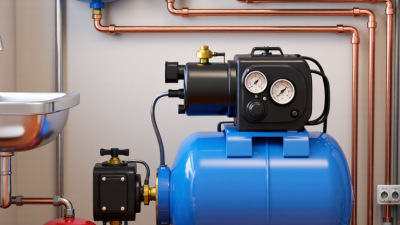
A domestic water booster pump increases pressure when the incoming supply cannot deliver a steady flow. When someone opens a tap, pressure in the pipe drops. A pressure switch or electronic sensor detects the change and starts the motor. The motor spins an impeller, which moves water through the pump and raises its pressure. Once the tap closes and pressure recovers, the controller stops the pump. Many systems include a small pressure tank to reduce frequent starts. It stores a little pressurized water for short draws, such as filling a glass. Some variable-speed models adjust motor speed as demand changes. Their control response depends on the system and installation.
Tips: Match pump capacity to household demand, not just the highest pressure number on a product label. Check the inlet supply, pipe size, and required outlet pressure. Keep the pump accessible for inspection, and follow the manufacturer’s instructions for dry-run protection and maintenance. A booster cannot solve every weak-flow problem; a blocked filter or narrow pipe may be the real cause.
Real installations are less tidy than diagrams suggest. A pump that cycles repeatedly may have a pressure tank issue, a leak, or a control setting that needs review. Listen for unusual noise and watch for pressure fluctuations. Small clues matter. Have a qualified installer assess persistent problems, especially where the incoming supply is inconsistent.
How a Domestic Water Booster Pump Works
Illustrative pressure-switch cycle: the example pump starts at 2.0 bar and stops at 3.5 bar. Actual settings vary by system.
When water use lowers system pressure to the cut-in setting, the controller starts the pump. The pump raises pressure until it reaches the cut-out setting, then stops. This cycle helps maintain water pressure as demand changes.
Common Applications and Essential Product Features
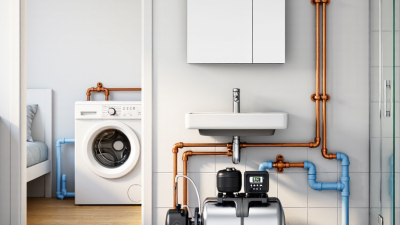
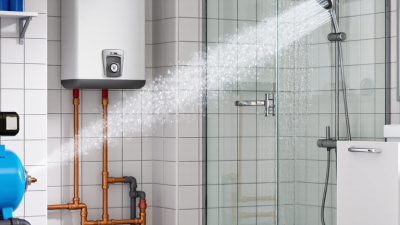
Domestic water booster pumps are used where mains pressure cannot reliably serve every outlet. In a two-storey home, an upstairs shower may weaken when a washing machine fills downstairs. A correctly sized system can help maintain steadier flow.
Small details matter. Pumps also support rooftop tank supply, garden irrigation, and small commercial buildings, though each application has different demand patterns. A pump chosen only by motor power may cycle too often or struggle during peak use.
Useful features include automatic pressure control, flow detection, and dry-run protection. These help the pump respond to changing demand and reduce damage if water supply is interrupted. A pressure tank can limit frequent starts in some setups, but it needs suitable sizing and maintenance.
Quiet operation matters when equipment sits near bedrooms. Check wetted materials for compatibility with the intended water supply, and confirm that seals and filters can be inspected without dismantling the whole unit. Installation conditions vary. Pipe diameter, inlet pressure, and elevation all affect performance, so product specifications should be checked against the actual site rather than treated as guarantees. Even a well-built pump can disappoint when those basics are overlooked.
Leading Chinese Manufacturers and Their Specialties
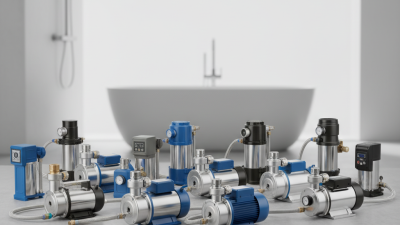
China’s domestic water booster pump manufacturers serve residential towers, hotels, factories, and municipal networks. Their specialties often differ by application. Some focus on compact, variable-speed sets for apartment buildings; others build multistage pumps for high-rise pressure zones or corrosion-resistant units for demanding water conditions. Packaged systems may include controls, pressure sensors, and standby pumps, simplifying installation in a crowded plant room.
Energy performance deserves close attention. The U.S. Department of Energy’s Improving Pumping System Performance guide notes that pumping systems use nearly 20% of global electricity and can account for 25–50% of energy use in some industrial facilities. That makes correct sizing more important than a headline efficiency figure. Ask manufacturers for pump curves, operating-point data, noise levels, and service-part availability. A polished brochure is not field evidence. I would also check whether stated performance reflects the complete booster package, not just the pump.
Tips: Match the duty point to measured peak demand, then compare variable-speed control, standby capacity, and maintenance access. Request test documentation and clarify water-quality limits before ordering. Small details matter. A control panel that is hard to reach can turn a simple service visit into a frustrating one.
How to Compare Manufacturers and Select a Suitable Pump
When comparing domestic water booster pump manufacturers in China, request performance data at your actual operating point, not just the largest flow figure. The U.S. Department of Energy’s Improving Pumping System Performance sourcebook estimates that pumping systems use nearly 20% of global electricity; in some industrial facilities, they account for 25–50% of energy use. These figures are not household estimates, but they show why efficiency deserves attention. Compare flow, total head, motor input, and efficiency on the same test basis. Small details matter. Ask for a factory test report using ISO 9906 methods, plus clear information on wetted materials, noise, warranty terms, and spare-parts availability.
Then match the pump to the home. A three-storey house with two showers running needs a different pressure-and-flow profile from a single bathroom apartment. Ask each manufacturer to state the expected outlet pressure under simultaneous demand, and how the controller responds when a tap opens or closes. Check whether the stated head includes realistic pipe losses; a catalogue curve rarely captures every elbow or narrow pipe. I would treat maximum flow cautiously. It may be measured at very low head, which is not the condition your home needs. Compare service access and replacement-part lead times too, since a compact pump is inconvenient when a small sensor causes a long repair delay.