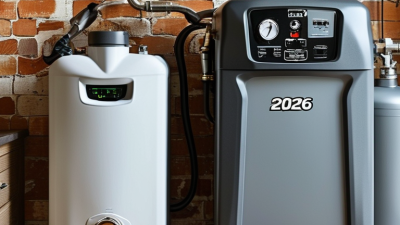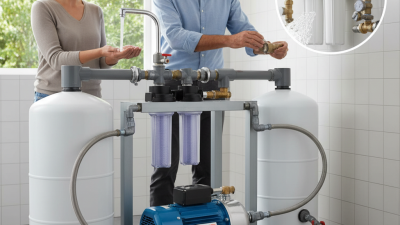
Choosing a pressure booster pump manufacturer is not simply a matter of comparing catalog prices. It requires practical judgment, verified data, and a clear understanding of water pressure demands. This guide examines ten leading manufacturers serving residential, commercial, and industrial markets. It considers pump efficiency, control technology, materials, service networks, warranty terms, and documented field performance.
Poul Due Jensen, founder of Grundfos, is often credited with saying, “The best pump is the one that is not there.” The statement sounds unusual. Yet it highlights an important engineering principle: a good system should deliver stable pressure quietly, efficiently, and with minimal maintenance. That principle guides this comparison. A pump should not be selected only because it has a powerful motor. Pipe length, elevation, peak demand, water quality, noise limits, and installation conditions can change the result.
The manufacturers discussed here have different strengths. Some focus on compact residential booster sets. Others specialize in smart controls, stainless-steel construction, or large commercial systems. Their reputations also vary by region. Availability matters.
This ranking is not absolute. Local technical support may outweigh global brand recognition. Published efficiency figures may not match real operating conditions. That is where careful evaluation becomes necessary. We compare available evidence, including product specifications, certifications, service coverage, user experience, and engineering suitability. The goal is practical guidance, not a perfect verdict. Readers should still confirm duty points with a qualified pump professional before purchasing.
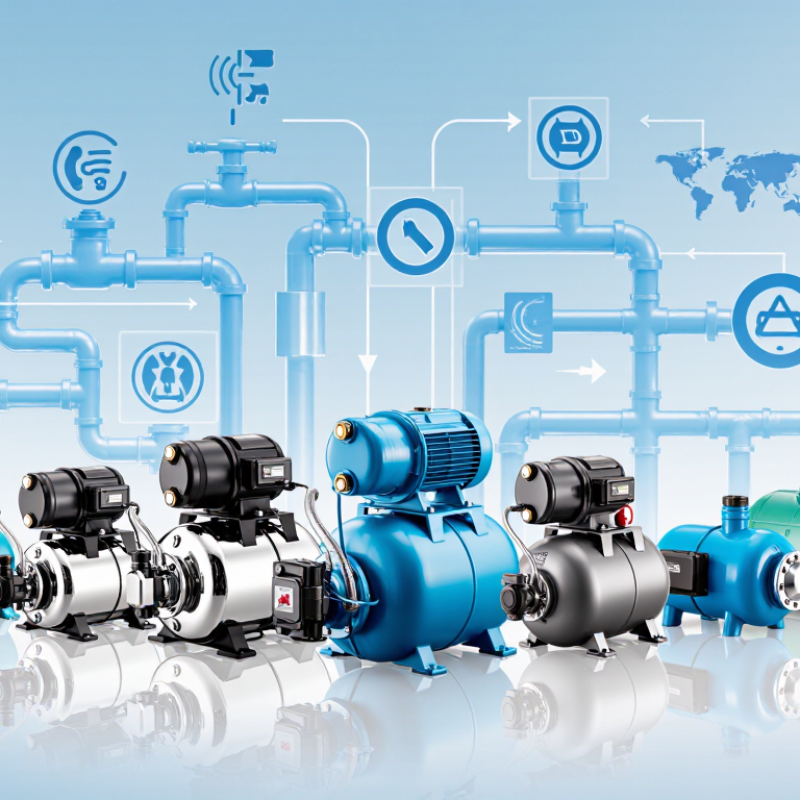
China Top 10 Pressure Booster Pump Manufacturers?
How to Evaluate Pressure Booster Pump Manufacturers in China
Choosing a pressure booster pump manufacturer requires more than comparing catalog prices. The International Energy Agency’s Energy Efficiency 2023 report states that electric motor systems consume about half of global electricity. Therefore, motor efficiency, control logic, and operating stability deserve close inspection. Ask for pump curves tested under ISO 9906 conditions, not only laboratory claims. Check the actual duty point, including flow, head, standby demand, and suction pressure.
Visit the factory if the project is critical. Observe machining, assembly, hydrostatic testing, and serial-number tracking. A reliable supplier should provide material certificates, motor efficiency data, vibration limits, and a documented factory acceptance test. The Hydraulic Institute emphasizes lifecycle performance, because purchase price rarely reflects energy, maintenance, and downtime costs. Request a five-year cost estimate with electricity assumptions clearly shown.
Look closely at the control cabinet. Does it protect against dry running, overload, phase loss, and unstable inlet pressure? Ask whether spare parts remain available after installation. References from similar buildings or industrial sites are valuable, but they should be verified independently. Some suppliers provide impressive test sheets. Yet the field result may differ. That gap matters. A small pilot test can reveal noise, pressure hunting, and poor sensor calibration before a full order. The evaluation may feel slow, but skipping it is usually more expensive.
| No. | Evaluation Dimension | Recommended Verification Data | Typical Technical Reference | Evidence to Request | Importance |
|---|---|---|---|---|---|
| 1 | Product Application Fit | Confirm whether the pump is designed for domestic water supply, commercial buildings, irrigation, industrial process water, or other applications. | Application requirements should match the pump curve, fluid temperature, duty cycle, and installation environment. | Application list, installation references, product selection guide, and operating-condition checklist. | High |
| 2 | Flow Rate and Head Performance | Compare rated flow, maximum flow, rated head, maximum head, and the operating point required by the project. | A complete pump curve should show head, flow, efficiency, power, and allowable operating range rather than only maximum values. | Factory pump curve, test report, selection calculation, and signed technical data sheet. | Critical |
| 3 | Pressure Control Accuracy | Evaluate set-pressure range, pressure stability, sensor accuracy, start-stop frequency, and response to changing demand. | Variable-speed systems should maintain stable outlet pressure under changing flow conditions when correctly sized and commissioned. | Controller specifications, pressure-test records, sensor calibration information, and commissioning procedure. | Critical |
| 4 | Motor and Energy Efficiency | Review motor efficiency class, input power, power factor, variable-frequency-drive efficiency, and expected annual energy consumption. | Efficiency should be assessed at the actual project duty point, because maximum motor efficiency may not occur at maximum flow. | Motor nameplate, efficiency test report, energy calculation, and applicable conformity documentation. | High |
| 5 | Materials and Corrosion Resistance | Check wetted-part materials, shaft material, mechanical seal type, elastomer compatibility, and suitability for water quality. | Stainless steel, cast iron, engineering plastics, and seal materials have different corrosion, temperature, and chemical-resistance properties. | Bill of materials, material certificates, seal specifications, and water-quality compatibility statement. | High |
| 6 | Noise and Vibration Control | Verify sound level, vibration level, balancing quality, bearing design, hydraulic stability, and installation requirements. | Noise and vibration depend on pump speed, cavitation margin, alignment, pipe strain, base stiffness, and operating point. | Noise test method, vibration test report, installation manual, and allowable operating limits. | Medium |
| 7 | Safety and Protection Functions | Confirm dry-run protection, overload protection, over-temperature protection, over-pressure protection, leakage protection, and fault alarms. | Protection functions should be tested under defined fault conditions and clearly described in the controller documentation. | Electrical schematic, protection-function list, safety test records, and controller fault-code manual. | Critical |
| 8 | Quality Management and Testing | Assess incoming inspection, process controls, pressure testing, electrical testing, performance testing, and final inspection procedures. | A quality-management certificate alone does not replace product-specific inspection and performance-test records. | Quality certificate, inspection plan, sample test report, calibration records, and nonconformity-control procedure. | Critical |
| 9 | Customization and System Integration | Evaluate voltage, frequency, connection size, control mode, communication interface, tank arrangement, skid design, and parallel-pump capability. | System compatibility must be checked for electrical supply, pipework, control signals, expansion capacity, and local installation codes. | General arrangement drawing, wiring diagram, interface protocol, configuration form, and sample approval process. | High |
| 10 | After-Sales Service and Total Cost | Compare warranty terms, spare-parts availability, technical response time, training, delivery reliability, maintenance cost, and lifecycle cost. | The lowest purchase price may not provide the lowest total cost when energy use, replacement parts, downtime, and service are included. | Warranty policy, spare-parts list, service-level agreement, maintenance schedule, references, and total-cost calculation. | Critical |
sale@harbertpump.com,
sale@harbertpump.com,
sale@harbertpump.com,
sale@harbertpump.com,
sale@harbertpump.com