Choosing the right HVAC pump affects comfort, energy use, noise, and equipment life. A pump may look like a small component, yet it controls how reliably water moves through a building. In a quiet mechanical room, the difference can be heard as vibration, felt as uneven heating, or noticed through rising electricity bills.
Dan Holohan, a respected hydronic-heating educator, explains a central design principle: “The circulator should pump away from the expansion tank.” This idea helps technicians understand pressure relationships inside closed-loop systems. It also shows why pump selection requires more than comparing horsepower. Flow rate, head pressure, fluid temperature, pipe resistance, control strategy, and service conditions all matter.
This guide examines the top HVAC pump types, including standard circulator pumps, inline centrifugal pumps, end-suction pumps, split-case pumps, and variable-speed models. Each design has a practical place. Small residential zones may need a compact circulator. Large commercial systems often demand stronger construction and easier maintenance access. Variable-speed control can reduce wasted energy, but only when the system is designed and commissioned correctly.
There is no universal winner.
Even experienced professionals can choose poorly when actual system resistance differs from the drawings. A pump that appears powerful may operate inefficiently at low demand. A smaller model may perform better when its control curve matches the system. The sections ahead compare these HVAC pump types through performance, installation, maintenance, efficiency, and real-world application.
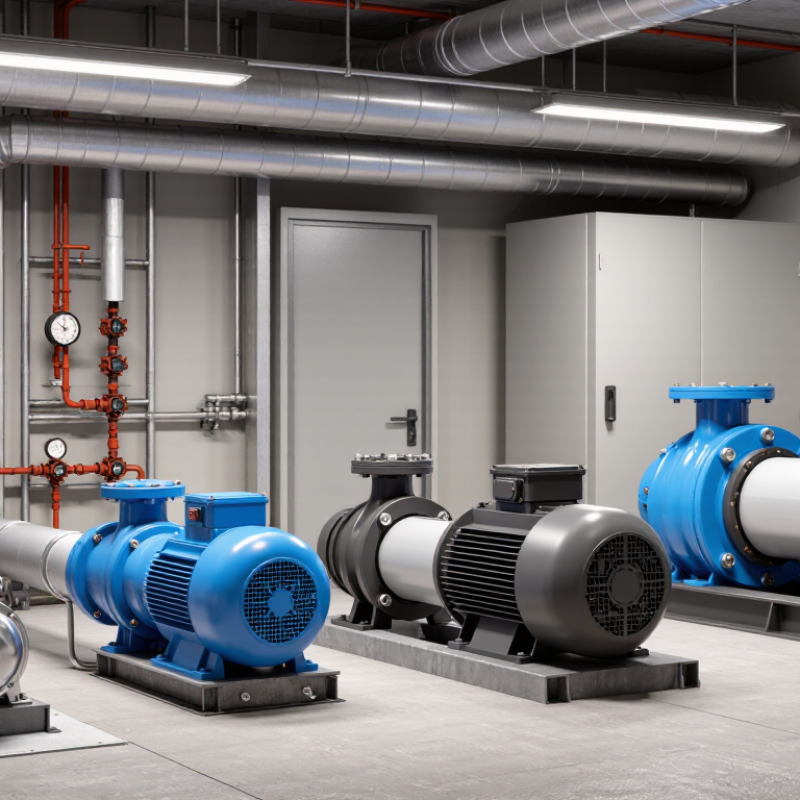
What Are the Top HVAC Pump Types?
HVAC pumps keep heating and cooling systems moving. They circulate water between boilers, chillers, coils, radiators, and terminal units. Without steady flow, rooms may feel uneven, even when the thermostat shows the correct setting. Pumps do not move refrigerant in standard hydronic systems. They move treated water through carefully sized pipework.
Centrifugal pumps remain common because they handle many commercial and residential applications. End-suction models suit straightforward heating loops. Inline pumps save space near air-handling units and fan-coil systems. Split-case pumps support larger buildings where higher flow rates and easier maintenance matter. Variable-speed pumps adjust output as zone valves open or close. This can reduce electrical use and limit pressure noise.
Pump selection depends on flow, head pressure, fluid temperature, pipe resistance, and operating hours. A pump that is too small may leave distant coils cold or warm. An oversized pump can waste energy and create a faint rushing sound at control valves. Sizing is not always neat. Field measurements sometimes challenge the original drawings. I have seen a minor air pocket disrupt circulation in an otherwise capable loop. Proper air removal, balancing, filtration, and routine seal checks are equally important. Even a reliable pump performs poorly when the system around it is neglected.
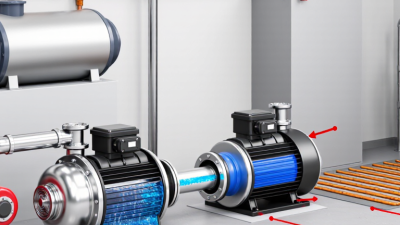
HVAC pumps are commonly classified by design and application, not by size alone. Centrifugal pumps handle most chilled-water and hot-water systems. They use a rotating impeller to create continuous flow. Inline models fit directly into piping and save plant-room space. End-suction pumps are practical for smaller systems, while split-case pumps suit larger flows and easier maintenance access. Vertical multistage pumps provide higher pressure where compact installation matters.
Application changes the selection. Primary pumps move water through chillers, boilers, or heat exchangers. Secondary pumps serve separate building zones, often with variable-speed control. Condenser-water pumps connect cooling equipment to heat-rejection systems. Small condensate pumps remove water from fan-coil units and air-conditioning equipment. Positive-displacement pumps appear less often in central hydronic circulation, but they can support dosing or specialized fluid-transfer duties.
A neat chart can mislead.
In field inspections, I have seen pumps oversized for a lightly loaded building. The result was noise, unstable control, and unnecessary power use. Designers should check flow, head, fluid temperature, pipe resistance, valve authority, and operating hours. Seal materials also matter when glycol or treated water is present. Pump curves must match real system conditions, not only catalog conditions. Yet even careful calculations need review after commissioning, because dirty strainers, trapped air, and closed valves can change performance quickly.
What Are the Top HVAC Pump Types?
The Main Types of HVAC Pumps and Their Operating Principles
HVAC water systems rely on pumps to circulate chilled water, hot water, or glycol mixtures. The pump type affects flow stability, energy use, noise, and maintenance. Centrifugal pumps remain the common choice for commercial heating and cooling systems. Their rotating impeller accelerates the fluid, while the casing converts velocity into pressure. This process supports continuous circulation through coils, valves, and heat exchangers.
End-suction centrifugal pumps place the suction connection near the impeller center. They suit many open mechanical-room layouts and are generally straightforward to service. Inline pumps use a compact body with suction and discharge connections on the same axis. This arrangement saves floor space and often fits smaller distribution loops. Vertical multistage pumps use several impellers in series. Each stage adds pressure, making them useful for tall buildings or systems with high resistance.
Positive-displacement pumps work differently. Rotary or reciprocating elements move a measured fluid volume during each cycle. They are less common for main HVAC circulation, but they can serve dosing, specialty, or low-flow applications. Selection should begin with required flow and system head, then consider fluid temperature, viscosity, seal materials, and available electrical power. Variable-speed drives can reduce energy use when demand changes, though poor control settings may create unstable flow. Field technicians often check air pockets, clogged strainers, and incorrect valve positions before blaming the pump. No selection method is flawless. A small design assumption can still produce a noisy, inefficient system.
| HVAC Pump Type | Operating Principle | Typical HVAC Uses | Flow and Pressure Characteristics | Main Advantages | Important Considerations |
|---|---|---|---|---|---|
| End-Suction Centrifugal Pump | A rotating impeller converts motor power into fluid velocity. The pump casing then converts part of that velocity into pressure, moving water from the suction connection to the discharge connection. | General chilled-water, hot-water, condenser-water, and process-water circulation in commercial and industrial HVAC systems. | Suitable for moderate-to-high flow rates and low-to-moderate system pressure. Performance varies with impeller diameter and rotational speed. | Simple construction Widely available Easy maintenance Cost-effective | Requires adequate suction conditions to prevent cavitation. Alignment, seal condition, and correct rotation are important for reliable operation. |
| In-Line Centrifugal Pump | A centrifugal impeller increases the velocity and pressure of the circulating fluid while the suction and discharge connections are arranged on the same axis or within the same piping line. | Air-handling-unit coils, fan-coil units, terminal heating and cooling circuits, and compact hydronic distribution systems. | Best suited to low-to-moderate flow and pressure requirements. The pump is installed directly in the pipework. | Space-saving Reduced piping work Compact installation Good for retrofit projects | Motor and pump weight may be transferred to the piping unless proper supports are provided. Larger models may require additional structural support. |
| Horizontal Split-Case Pump | The casing is divided horizontally, allowing the rotating assembly to be accessed without disconnecting the main suction and discharge piping. The impeller develops pressure through centrifugal action. | Large chilled-water plants, condenser-water systems, district cooling, central heating systems, and high-capacity HVAC distribution. | Designed for high flow rates and continuous-duty operation. It can provide substantial pressure while maintaining good hydraulic efficiency. | High capacity Serviceable design Stable operation Long service life | Requires a larger footprint and a properly designed foundation. Correct shaft alignment and regular bearing inspection are essential. |
| Vertical In-Line Pump | A vertically oriented motor and impeller assembly produces centrifugal flow through pipe connections arranged in a straight-line configuration. The motor is commonly mounted above the pump casing. | Mechanical rooms with limited floor space, chilled-water loops, heating-water systems, and variable-flow distribution networks. | Handles a broad range of flow and pressure duties, depending on the impeller, motor, and pump size. It is often selected where floor area is limited. | Small footprint Straight-through piping Flexible layout Suitable for VFD control | The structure must support the vertical assembly. Installation clearances should allow access to the motor, coupling, seals, and bearings. |
| Multistage Centrifugal Pump | Several impellers are arranged in series. Each stage adds pressure to the fluid, allowing the pump to achieve higher total head than a single-stage design of similar size. | High-rise building HVAC systems, boiler-feed applications, pressure-boosting circuits, and systems with significant elevation or resistance. | Produces relatively high pressure or head at moderate flow rates. The total pressure rise is the combined contribution of the individual stages. | High pressure capability Compact for its head Efficient for demanding systems | Water quality, seal selection, air removal, and operating within the specified flow range are important. Dry running can quickly damage internal components. |
| Primary Hydronic Circulation Pump | The pump circulates water continuously or according to a control sequence through the heat source, chiller, heat exchanger, or primary plant loop. | Boiler loops, chiller loops, heat-pump circuits, and plant systems that require a defined minimum flow through the heat-producing or heat-removing equipment. | Usually selected for the flow required by the plant equipment and the pressure losses in the primary circuit. Flow may be constant or variable. | Protects plant equipment Maintains required flow Supports stable control | The design must follow the minimum-flow requirements of the boiler, chiller, or heat pump. Hydraulic separation may be needed between primary and secondary circuits. |
| Secondary Distribution Pump | The pump moves conditioned water through building distribution circuits. It responds to the pressure and flow requirements of connected zones, coils, valves, and terminal units. | Variable-flow chilled-water and heating-water systems, air-handling-unit branches, floor-by-floor distribution, and zone-level hydronic networks. | Flow changes with building load and control-valve position. Variable-speed operation is commonly used to match pump output to demand. | Load-responsive Energy-saving potential Good zoning flexibility Improved comfort control | Proper differential-pressure control is required. Excessive pressure can create valve noise, while insufficient pressure can reduce coil flow and capacity. |
| Positive-Displacement Pump | The pump traps a defined volume of fluid and moves it from the inlet to the outlet during each cycle. Flow is produced by displacement rather than by converting velocity through an impeller. | Specialized HVAC applications such as fuel-oil transfer, refrigerant-oil circulation, dosing, glycol or additive injection, and other high-viscosity fluid duties. | Provides a nearly fixed volume per cycle and can develop high pressure. Flow is closely related to speed and displacement. | Accurate metering High-pressure capability Handles viscous fluids Good low-flow performance | A pressure-relief device is generally required because the pump can continue building pressure if the discharge is blocked. It is not normally the first choice for large open hydronic water loops. |
HVAC pump selection starts with the duty point: required flow and total head. Common options include end-suction, inline, split-case, and vertical multistage pumps. Inline pumps save plant-room space, while split-case designs often suit larger chilled-water systems. Compare measured flow, head, motor input, and wire-to-water efficiency, not brochure efficiency alone. A pump that performs well at full load may waste energy at night.
The International Energy Agency reports that electric motor systems use about 53% of global electricity. Pump controls therefore deserve close attention. Variable-speed control can reduce throttling losses, but only when sensors, valves, and control sequences are correctly commissioned. The U.S. Department of Energy notes that optimized pumping systems may cut energy consumption by 20–50% in suitable facilities. Results vary. Oversized pumps remain a common mistake. They create noise, unstable control, and unnecessary valve losses.
Tips: Record differential pressure, temperature, vibration, and running hours each month. Check whether the pump operates near its best efficiency point. Inspect seals and bearings before failure becomes visible. Water treatment also matters, because corrosion and air can damage performance. The Hydraulic Institute recommends using reliable test methods and system data when evaluating pump efficiency. Field readings can be imperfect, especially with poor sensor placement. That is worth questioning before replacing equipment. A lower purchase price may hide higher electricity, maintenance, and downtime costs.
Typical comparison of common HVAC centrifugal pump configurations
The efficiency values represent typical peak hydraulic-efficiency ranges converted to approximate midpoint values. The maintenance index is a comparative scale from 1 to 5, where a higher score indicates a greater routine maintenance burden. Actual results depend on pump sizing, operating point, water quality, controls, and installation conditions.
Selecting an HVAC pump starts with the building, not the pump catalog. Inline circulators suit compact hydronic loops with moderate flow and limited floor space. End-suction pumps handle many commercial heating and cooling systems. Split-case pumps often fit larger plants requiring high flow and easier servicing. Vertical turbine pumps may serve open water sources, but they need careful installation and alignment.
Measure the required flow and total head from actual system data. Do not rely on an old design assumption. Check pipe length, valves, coils, strainers, and elevation changes. A pump with excessive head can waste energy and create control problems. A pump with insufficient head may leave distant terminal units cold or warm. Variable-speed control can reduce energy use when loads change, especially in buildings with multiple zones.
Look beyond the duty point. Confirm fluid temperature, glycol concentration, seal materials, electrical supply, noise limits, and available maintenance access. NPSH deserves attention in open systems and high-temperature applications. Redundancy may matter in hospitals, data rooms, and continuously occupied facilities. A perfect selection on paper can still fail in practice. Poor balancing, clogged strainers, or weak controls can undermine good equipment. Leave room for inspection, testing, and future load changes. The quietest pump is not always the most efficient one.
sale@harbertpump.com,
sale@harbertpump.com