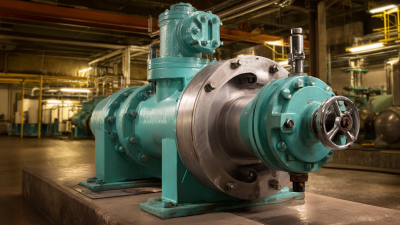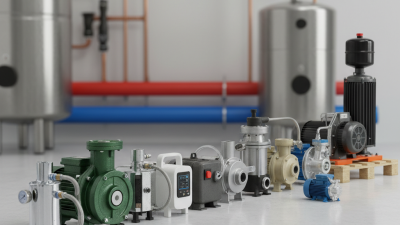
An HVAC pump quietly controls how heating and cooling move through a building. It pushes water through boilers, chillers, radiant floors, fan-coil units, and heat exchangers. When the pump is poorly selected, rooms may feel uneven, pipes can become noisy, and energy bills may rise.
Hydronic heating educator Dan Holohan puts it plainly: “Pumps don’t pump water. They create a pressure differential.” That idea changes how technicians choose an HVAC pump. Flow rate matters, but so does head pressure, pipe length, fitting resistance, fluid temperature, and system design. A small circulator may suit a residential radiant loop. A larger inline or end-suction pump may be necessary for a commercial chilled-water circuit. Variable-speed models can adjust output as demand changes.
The right choice is rarely based on horsepower alone. It begins with the system’s actual operating conditions. Measure the circuit. Check the manufacturer’s performance curve. Confirm compatibility with glycol, seals, voltage, and controls. These details are easy to overlook.
Not every efficient pump fits every installation. That is where this guide becomes practical. It explains the main HVAC pump types, their working differences, and the situations each type handles best. It also examines common selection mistakes, including oversized pumps that waste electricity and undersized pumps that fail to deliver comfort. Some systems remain difficult to judge without field measurements. That limitation deserves honesty. A reliable decision combines technical data, site experience, and the advice of a qualified HVAC professional.
What Is an HVAC Pump and Which Type Do You Need?
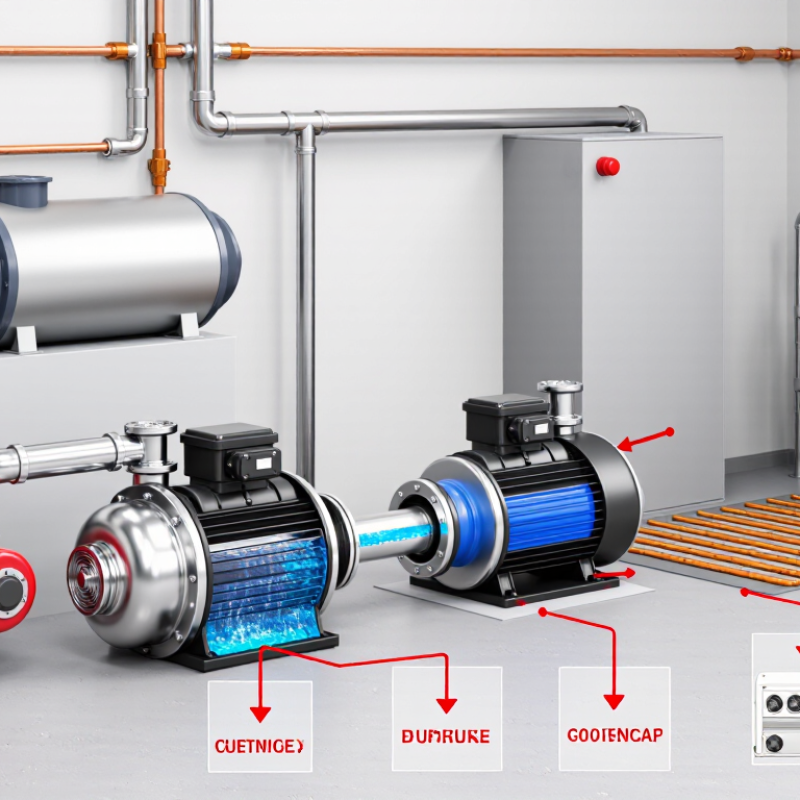
An HVAC pump moves water through heating and cooling systems. It creates pressure that pushes heated or chilled water through pipes, coils, radiators, and floor loops. Without proper circulation, one room may feel comfortable while another stays cold or humid. The pump does not create heat or cooling. It transfers energy through controlled water movement.
Most HVAC pumps use a rotating impeller inside a sealed housing. As the impeller spins, it draws water into the pump and pushes it toward the system circuit. A motor supplies the turning force. Sensors or controls may adjust speed when demand changes. This can reduce electrical use and limit pipe noise. Small circulator pumps suit simple residential loops. Larger centrifugal pumps handle higher flow rates in commercial systems. Variable-speed models respond more precisely to changing loads.
Choosing the right type requires more than matching pipe size. A technician should check required flow, system pressure, water temperature, pipe resistance, and available power. An oversized pump can waste energy and create humming or valve noise. An undersized pump may leave distant coils poorly supplied. That mistake is common. System measurements can also be incomplete, especially in older buildings. I would verify the pump curve, installation direction, air removal, and isolation valves before replacement. A quiet pump is not always a correctly selected pump.

An HVAC pump circulates water through heating, chilled-water, or condenser-water systems. The chart shows the water flow required to transfer the same 100 kW of heat at commonly used temperature differences. Flow is calculated using Flow (m³/h) = Heat Load (kW) ÷ [1.163 × ΔT (°C)].
The values are representative design calculations for water at approximately 100 kW of heat transfer: chilled water and condenser water use a 5°C temperature difference, while heating water uses a 20°C temperature difference. Final pump selection must also consider required head, pipe resistance, control valves, fluid temperature, redundancy, and system layout.
An HVAC pump moves water through chillers, boilers, coils, and terminal units. The correct type depends on flow, pressure, fluid temperature, and control strategy. Centrifugal pumps dominate hydronic systems because they deliver high flow efficiently. Inline pumps suit compact risers and small commercial loops. End-suction pumps handle many light-duty applications. Split-case pumps are better for large buildings with steady, high-volume circulation.
Variable-speed pumps serve systems with changing demand. They slow down as control valves close, reducing unnecessary pressure and energy use. The U.S. Department of Energy’s pumping-system guidance identifies pumping as roughly 20% of industrial electricity consumption, although this figure is not HVAC-specific. Its assessment tools also show why load matching matters. A pump running continuously at full speed may waste energy quietly.
Large campuses often use vertical multistage pumps when pressure is high and space is limited. Heating systems may need corrosion-resistant materials, especially with treated water or glycol mixtures. Chilled-water systems usually require careful seal selection and vibration control.
ASHRAE Handbook guidance stresses matching pump selection with system resistance, not simply choosing a larger motor. Bigger is not safer. That shortcut can increase noise, bypass flow, and operating cost. In practice, designers should verify the actual duty point, then compare efficiency across expected operating conditions. A perfect selection is uncommon; measured commissioning data may expose assumptions that looked reasonable on paper.
An HVAC pump moves water or treated fluid through heating and cooling circuits. It keeps heat transfer steady across coils, radiators, chillers, and boilers. The right selection depends on more than pipe size. Start with required flow rate and total head. Flow describes how much fluid moves. Head represents the resistance the pump must overcome.
System layout matters. Inline pumps suit compact mechanical rooms and shorter pipe runs. End-suction pumps can serve larger systems with accessible maintenance space. Variable-speed pumps adjust output as valves open or close, reducing energy waste during partial load conditions.
Check fluid temperature, pressure, pipe material, and connection size before choosing. A pump with excessive capacity may create noise, erosion, and unstable control. I have seen designs where “more power” caused more trouble. That assumption deserves review.
Tips:
Ask for a verified duty point, not just a horsepower rating. Compare the pump curve with the system curve. Confirm motor protection and control compatibility. Allow room to remove the motor or seal. Inspect strainers and air vents during commissioning. Small air pockets can reduce performance quickly. Keep records of flow readings and vibration levels. They help reveal problems early. Local climate, operating hours, water quality, and future expansion also influence the decision. A qualified technician should confirm calculations on site, because drawings rarely show every real-world restriction.
What Is an HVAC Pump and Which Type Do You Need?
Matching pump capacity with system requirements starts with heat load, not motor size. For water systems, the common design relationship is Q = 500 × GPM × temperature difference. A 500,000 Btu/h load with a 10°F temperature difference requires about 100 GPM. The calculation looks simple. Real systems are less forgiving.
Pump head must cover pipe friction, valves, coils, strainers, and elevation. Measure the pressure drop across the most demanding circuit, then convert it into feet of head. Do not automatically add a large safety margin. Oversizing can cause noisy valves, unstable control, and unnecessary power use. A smaller pump may fail to reach remote coils, especially after filters become dirty.
The U.S. Department of Energy’s Improving Pumping System Performance sourcebook reports that variable-speed drives can reduce energy use by 20% to 50% in suitable variable-torque applications. That benefit depends on proper control and accurate sizing. A variable-speed pump cannot fix an incorrect head calculation. ASHRAE Handbook guidance also supports selecting pumps near their best efficiency point, where operation is steadier and wear is often lower. In practice, I would verify design flow, system resistance, and operating ranges before choosing a pump type. It is easy to trust a catalog curve too much. Field conditions often disagree.
Practical comparison of common HVAC pump types, operating ranges, and the basic calculations used for pump selection
| HVAC Pump Type | Typical System Application | Common Fluid | Typical Flow Range | Typical Head Range | Control Method | Main Selection Considerations |
|---|---|---|---|---|---|---|
| End-Suction Centrifugal Pump | Small to medium chilled-water, hot-water, and condenser-water systems | Water or water-glycol mixture | 5–500 gpm (1.1–114 m³/h) |
20–150 ft (6–46 m) |
Fixed speed, variable-frequency drive, or differential-pressure control | Suitable for straightforward piping layouts; verify required flow, total dynamic head, NPSH, fluid temperature, and motor efficiency. |
| Inline Circulator | Small hydronic heating loops, fan-coil units, radiant heating, and small chilled-water branches | Water or low-concentration glycol solution | 1–150 gpm (0.2–34 m³/h) |
5–60 ft (1.5–18 m) |
Multi-speed setting, proportional-pressure control, or constant-pressure control | Compact and easy to install in-line; best for lower-capacity circuits with relatively moderate pressure losses. |
| Vertical In-Line Pump | Commercial chilled-water and heating-water distribution systems with limited floor space | Water or water-glycol mixture | 20–1,500 gpm (4.5–341 m³/h) |
30–250 ft (9–76 m) |
Variable-frequency drive and automatic differential-pressure reset | Reduces footprint and can simplify piping; confirm pipe support, service clearance, seal compatibility, and operating point. |
| Split-Case Centrifugal Pump | Large commercial buildings, district-energy connections, central plants, and condenser-water circuits | Water or treated water | 200–5,000 gpm (45–1,136 m³/h) |
50–350 ft (15–107 m) |
Variable-frequency drive or staged parallel-pump operation | Appropriate for high flow and continuous operation; evaluate efficiency near the duty point, maintenance access, baseplate alignment, and redundancy. |
| Multistage Centrifugal Pump | High-rise hydronic systems, high-pressure heating loops, and applications requiring substantial head | Water or treated water | 5–400 gpm (1.1–91 m³/h) |
100–600 ft (30–183 m) |
Variable-frequency drive or pressure-based control | Generates higher pressure through multiple impellers; check maximum working pressure, stage configuration, temperature rating, and seal materials. |
| Close-Coupled Centrifugal Pump | Packaged HVAC equipment, process cooling, small commercial systems, and utility loops | Water or water-glycol mixture | 5–300 gpm (1.1–68 m³/h) |
20–180 ft (6–55 m) |
Fixed speed or variable-frequency drive | Provides a compact motor-and-pump arrangement; confirm serviceability, shaft-seal requirements, temperature limits, and motor overload protection. |
| Condensate Removal Pump | Air-handling units, fan-coil units, ductless indoor units, and high-efficiency equipment | Condensate water | Up to 20 gpm (up to 4.5 m³/h) |
5–50 ft (1.5–15 m) |
Float switch, reservoir level sensor, and alarm contact | Size for peak condensate production and lift height; include a safety shutoff or alarm where overflow could damage property. |
| Heat-Recovery or Ground-Loop Circulator | Heat-pump source loops, geothermal systems, and heat-recovery circuits | Water or inhibited water-glycol mixture | 5–500 gpm (1.1–114 m³/h) |
20–200 ft (6–61 m) |
Variable-frequency drive, temperature reset, or differential-pressure control | Account for glycol viscosity, low outdoor temperatures, heat-exchanger pressure drop, corrosion protection, and seasonal operating conditions. |
An HVAC pump moves heated or chilled water through pipes, coils, and terminal units. Its job is simple, but selection requires careful calculations. Flow rate determines how much water moves. Head pressure shows how much resistance the pump must overcome. A pump that is too small may leave rooms cold. An oversized pump wastes electricity and can create pipe noise.
Installation affects performance immediately. The pump should match the system’s design flow, pipe size, and control method. Keep the shaft correctly aligned, and support nearby pipework separately. Trapped air can cause rattling, weak circulation, and premature wear. Air removal matters. Insulation should cover chilled-water pipes and fittings. Otherwise, condensation can damage surrounding surfaces and increase cooling loads.
Variable-speed pumps often reduce energy use by adjusting output as demand changes. However, efficiency depends on correct programming, not just advanced equipment. During maintenance, technicians should check seals, bearings, vibration, electrical connections, and pressure readings. A dirty strainer can quietly restrict flow. Small problems grow. In practice, design calculations may not match real occupancy or weather patterns. Reviewing operating data after installation can reveal this gap. I would not treat the first control setting as permanent; seasonal testing and measured adjustments usually produce better results.
sale@harbertpump.com,
sale@harbertpump.com