Top Residential Water Booster Pump Types in 2026?
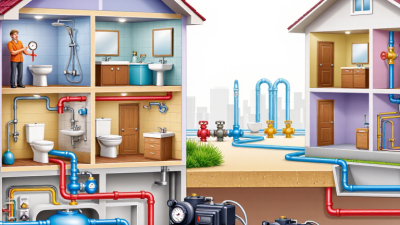
A weak shower upstairs can make an ordinary morning feel like a plumbing problem. A kitchen tap may also lose force when a washing machine fills. In 2026, choosing a residential water booster pump starts with understanding why pressure falls, not simply buying the largest unit. Bigger is not always better.
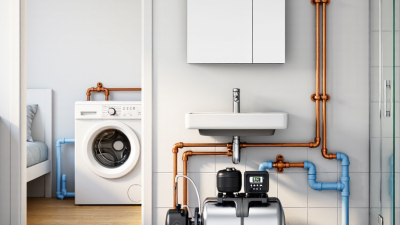
Common options include single-stage centrifugal pumps, multistage pumps, jet pumps, and variable-speed booster systems. Each suits different conditions. A compact centrifugal model may help a small home with modest demand, while a multistage design can provide stronger pressure for several fixtures. Variable-speed controls adjust output as taps open and close. That can make pressure steadier. Yet controls add complexity, and no pump fixes a restricted pipe or an unreliable water supply.
Measure pressure at rest and while water is flowing. Note how many showers, faucets, or appliances may run together. Check the pump’s flow and pressure curves, noise rating, connection size, and compatibility with the water source. Small details matter. So does access for maintenance. Product specifications are useful, but they cannot replace an assessment of the home’s plumbing.
There is no universal winner. A pump that works quietly in one house may cycle too often in another. This guide compares the main residential types, their practical strengths, and the trade-offs homeowners should weigh before choosing. The right fit depends on measured demand, installation conditions, and a little honest uncertainty.
Set the Target: A. O. Smith’s 40–60 psi Residential Water-Pressure Benchmark
For a residential water booster pump, set a pressure target before comparing pump types. A practical benchmark is 40–60 psi, measured in pounds per square inch. That range can support showers, faucets, and common household appliances without making pressure the only goal. It is not a universal rule. Older pipes, pressure-reducing valves, and appliance requirements can change what works safely.
Check pressure with a gauge on an outdoor faucet or laundry connection. Take one reading with taps closed, then another while a shower or faucet is running. A large drop under flow may point to undersized piping, a clogged filter, or a supply issue—not just a weak pump. I still find this step easy to skip. That can lead to buying equipment that treats the symptom.
Tips: Choose a pump with an adjustable pressure controller and a flow rate suited to simultaneous household use. Set the cut-in and cut-out pressures carefully, and confirm the pump does not push pressure beyond the rating of your plumbing. Ask a qualified plumber if readings are unstable.
A variable-speed booster can maintain steadier pressure as demand changes. A fixed-speed model may be simpler, but can cycle more often. Neither option fixes leaks or restricted pipes. Record your gauge readings before installation, then check them again during normal use. A little pressure variation is expected. Pressure that surges or stays unusually high deserves attention.
Compare Single-Stage Centrifugal Boosters by Flow Rate and Total Dynamic Head
Single-stage centrifugal boosters should be compared at the flow and total dynamic head (TDH) your home actually needs. TDH includes elevation, pipe friction, and the pressure increase required at the fixtures. As a useful reference, 1 psi equals about 2.31 feet of water head. Adding 40 psi therefore requires roughly 92 feet of pressure head, before accounting for elevation and losses. That is not a small lift.
Flow matters just as much. The U.S. EPA’s WaterSense specification limits labeled showerheads to 2.0 gallons per minute (gpm), but several fixtures running together can demand much more. Compare pump curves at realistic operating points, such as 10 gpm at 70 feet versus 15 gpm at 100 feet; these are examples, not universal household targets. The U.S. Department of Energy’s Improving Pumping System Performance sourcebook explains that centrifugal-pump flow varies with speed, while head changes with the square of speed. A pump’s maximum-flow figure alone can mislead.
Check the curve where your required flow meets your calculated TDH, and leave reasonable allowance for filter fouling or future demand. A tidy spreadsheet can still miss a partly closed valve or undersized pipe. Measure, then verify. Oversizing may cause frequent cycling or noisy flow, while undersizing leaves upper-floor showers weak. Real plumbing rarely behaves as neatly as a diagram.
Top Residential Water Booster Pump Types in 2026? — Compare Single-Stage Centrifugal Boosters by Flow Rate and Total Dynamic Head
Representative preliminary ranges for residential applications. Actual flow and head depend on the specific pump curve and installation; a pump does not usually deliver its maximum flow at its maximum head.
| Booster Configuration |
Typical Flow Range |
Typical Total Dynamic Head (TDH) |
Common Residential Use |
Selection Considerations |
| Compact inline, single-stage centrifugal |
3–15 gpm
(11–57 L/min) |
15–60 ft
(4.6–18 m) |
Small homes, a single pressure zone, or modest pressure assistance at the water entry. |
Check minimum flow requirements, inlet pressure, and whether the pump is suitable for continuous domestic-water service. |
| Close-coupled end-suction, fixed-speed |
5–25 gpm
(19–95 L/min) |
25–100 ft
(7.6–30 m) |
Typical single-family homes with several fixtures that may run at the same time. |
Confirm the duty point on the pump curve. A pressure tank or appropriate control may be needed to limit frequent starts. |
| Variable-speed, single-pump centrifugal booster |
3–25 gpm
(11–95 L/min) |
20–100 ft
(6–30 m) |
Homes with changing demand where steadier outlet pressure is preferred as fixtures turn on and off. |
Verify the controller’s pressure range, minimum-flow behavior, electrical supply, and compatibility with the water source. |
| Two-pump staged or alternating set (single-stage pumps) |
5–40 gpm total
(19–151 L/min) |
25–120 ft
(7.6–36.6 m) |
Large homes or properties with higher peak demand, where standby capacity or staged operation is useful. |
Confirm that the controls stage pumps correctly and that the supply, piping, and pressure vessel support the combined duty. |
TDH includes: required pressure head, vertical elevation difference, and friction losses through pipes and fittings. As a practical conversion, 1 psi is approximately 2.31 ft of water head. Select a pump using the required flow and TDH at the same operating point, and check local plumbing rules and potable-water requirements before installation.
Assess Multistage Pumps for Higher Head in Compact Residential Systems
In a compact home with a basement utility closet, a multistage booster pump can create useful pressure without requiring a large footprint. Several impellers raise water pressure in stages, making this design suitable when supply pressure is modest and the home needs additional head. A shower on an upper floor and a washing machine running together are practical conditions to consider.
Check the pump curve, not just the maximum pressure printed on a product sheet. The curve shows how much flow the pump can deliver at a given head. Measure the available inlet pressure and estimate peak household demand before choosing a unit. A pump that meets a high pressure target but cannot supply enough flow may leave taps disappointing. Sizing is easy to get wrong.
Noise and cycling matter in close quarters. A pressure tank, suitable controls, and vibration-isolating mounts can reduce frequent starts and transmitted hum. Still, more pressure is not always better. Excess pressure may stress fixtures or cause leaks, especially in older plumbing. Installation should include pressure monitoring and appropriate protection against dry running. A qualified installer can confirm local requirements and test performance at several fixtures, though even careful estimates may need adjustment after real use.
Check VFD Pump Selection Against HI’s 70–120% Best-Efficiency-Point Range
Top Residential Water Booster Pump Types in 2026?
Check VFD Pump Selection Against HI’s 70–120% Best-Efficiency-Point Range
Residential boosters commonly use variable-frequency-drive (VFD) multistage pumps, fixed-speed pumps, or pressure-tank systems. A VFD can adjust speed as taps open and close, helping maintain steady pressure. But a quiet controller display does not prove the pump is operating efficiently.
The Hydraulic Institute’s ANSI/HI 9.6.3 guideline identifies 70–120% of best-efficiency point (BEP) as a commonly used preferred operating range for many rotodynamic pumps. Treat it as a screening range, not a universal guarantee: the acceptable range depends on pump design and application. Plot expected household demand against the manufacturer’s curve, including low-flow periods when only one faucet runs. The U.S. Department of Energy’s Improving Pumping System Performance sourcebook also stresses evaluating the whole system, not just the pump. Check pipe losses, pressure settings, and tank size. Small details matter. Still, I would not assume a VFD saves energy if the selected pump is oversized.
Tips: Ask for the pump curve at your actual speed range. Confirm that minimum flow, motor cooling, and pressure control remain suitable. Check the curve. A little uncertainty is normal; household demand changes by the hour.
VFD pump selection: The Hydraulic Institute’s 70–120% of BEP range is a reference for evaluating operation around a pump’s best efficiency point. Check the pump’s performance curve and expected system demand; this range is not a guarantee of efficiency or suitability for every installation.
Screen Shallow-Well Jet Pumps Against the Typical 25-ft Suction-Lift Limit
Top Residential Water Booster Pump Types in 2026?
Screen Shallow-Well Jet Pumps Against the Typical 25-ft Suction-Lift Limit
A shallow-well jet pump can suit a home drawing water from a nearby cistern or well. Its practical suction lift is often around 25 feet, measured vertically from the pumping water level to the pump inlet. It is not the well’s total depth. That distinction matters. A well may be deeper, provided its water level stays within the pump’s usable lift.
Treat 25 feet as a limit, not a design target. Pipe friction, small air leaks, elevation, and a falling water level can all reduce performance. A pump that works during a cool morning test may struggle when several taps run together. Small losses add up. I would not size a system from a catalog figure alone; it is a tempting shortcut, but a poor substitute for checking the pump curve and actual site conditions.
Measure the water level while the pump is running, then include the vertical rise and pipe route in your estimate. Keep suction piping airtight, use suitable fittings, and confirm that the pump can be primed as specified. At higher elevations, the available lift may be lower. If the source sits near or beyond the practical limit, a pump positioned closer to the water—or a submersible design—may be more dependable. A little uncertainty remains until the system is tested under real household demand.