
What Are the Top Rolled Metal Types for Buyers? The answer depends on application, forming requirements, surface protection, and total cost. Rolled Metal is not one uniform category. It includes hot-rolled steel, cold-rolled steel, galvanized steel, stainless steel, and aluminum products.
Market scale explains why these distinctions matter. The World Steel Association reported approximately 1.84 billion tonnes of crude steel production worldwide in 2024. The International Aluminium Institute recorded global primary aluminium production above 73 million tonnes in 2024. These figures show a vast supply base, but they do not guarantee the right material for every project. A thick hot-rolled plate may suit structural fabrication. A smooth cold-rolled sheet may perform better in appliance panels. Galvanized steel adds zinc protection. Stainless steel offers stronger corrosion resistance, especially in wet or chemical environments.
The choice is rarely obvious. Buyer priorities can conflict.
Edwin Basson, Director General of the World Steel Association, has stated, “Steel is a permanent material.” That principle supports long service life and repeated recycling, but product performance still depends on grade, coating, thickness, and processing. Buyers should examine mill certificates, dimensional tolerances, coating weight, and delivery consistency. The World Steel Association also emphasizes steel’s high recyclability and durability in its sustainability publications.
Price alone can mislead. A cheaper coil may require extra coating, machining, or replacement. Yet buyers sometimes over-specify materials without checking real operating conditions. This guide compares leading Rolled Metal types, helping procurement teams balance strength, appearance, corrosion resistance, and practical value.
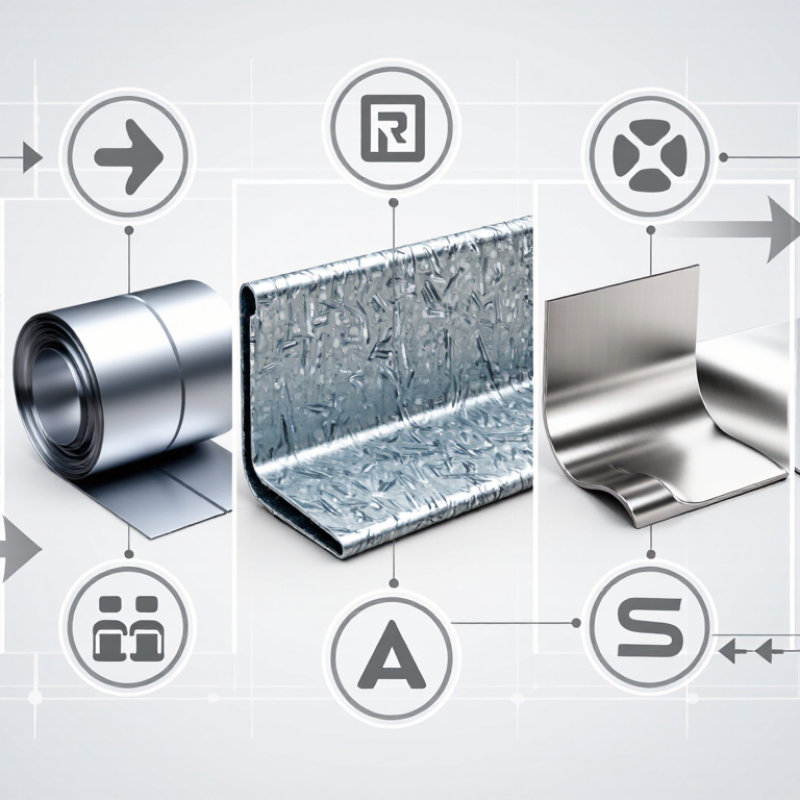
What Are the Top Rolled Metal Types for Buyers?
Rolled metal is produced by passing metal through rotating rollers to reduce thickness or shape its profile. Buyers usually encounter hot-rolled and cold-rolled products. Hot rolling happens at high temperatures, creating practical, cost-effective material for beams, plates, and structural parts. Cold rolling improves dimensional accuracy and surface smoothness. It suits cabinets, appliances, and precision components.
Carbon steel remains a common choice for strength and cost control. Stainless steel offers stronger corrosion resistance, especially in humid or chemically exposed areas. Aluminum is lighter and naturally resists rust, making it useful for transport equipment and enclosures. Galvanized steel adds a protective zinc coating. Each type solves a different problem. None is automatically best.
Experienced buyers compare more than the metal name. Check thickness, width, grade, temper, surface finish, edge condition, and dimensional tolerance. A handheld caliper can reveal variation that a sales sheet may not show. Inspect the coil or sheet for scratches, uneven coating, oil residue, or damaged edges. Request test reports and traceability records when performance matters. Also compare minimum order quantities, cutting options, packaging, and delivery conditions. Price alone can mislead. A cheaper coil may require extra trimming, cleaning, or rejected parts. I have found that supplier data is valuable, but it still needs practical verification. Perfect comparisons are rare. The final choice should match the forming method, service environment, required strength, and acceptable production risk.
| Rolled Metal Type | What It Means | Typical Density | Corrosion Resistance | Formability | Common Rolled Forms | Typical Buyer Priorities |
|---|---|---|---|---|---|---|
| Carbon Steel | Iron-based steel with carbon as the principal alloying element; commonly supplied as hot-rolled or cold-rolled sheet, plate, and coil. | About 7.85 g/cm³ | Low without paint, oil, plating, or another protective coating. | Good in low-carbon grades; cold-rolled material generally offers better surface quality and dimensional control. | Hot-rolled coil, cold-rolled sheet, plate, strip | Strength, availability, weldability, thickness range, and total cost. |
| Stainless Steel | Steel containing at least 10.5% chromium by mass, which supports the formation of a protective passive surface layer. | Typically 7.7–8.1 g/cm³ | High, but performance depends on grade, surface condition, temperature, and exposure. | Good to very good; austenitic grades are generally highly formable. | Cold-rolled sheet, strip, plate, foil | Hygiene, corrosion resistance, appearance, temperature service, and maintenance requirements. |
| Aluminum | A lightweight nonferrous metal rolled into sheet, plate, foil, and strip; properties vary significantly by alloy and temper. | About 2.70 g/cm³ | Good because of its naturally forming oxide layer; some environments require additional protection. | Generally good; temper and alloy selection affect bending and forming behavior. | Sheet, plate, coil, strip, foil | Low weight, strength-to-weight ratio, conductivity, forming, and transport efficiency. |
| Copper | A highly conductive nonferrous metal supplied in rolled sheet, plate, strip, and foil, often selected for electrical or thermal performance. | About 8.96 g/cm³ | Good in many atmospheres; surface patina can develop over time. | Excellent in many commercially pure and ductile grades. | Sheet, plate, strip, foil | Electrical conductivity, thermal conductivity, ductility, and material recovery value. |
| Galvanized Steel | Carbon steel sheet or coil coated with zinc, usually through a continuous hot-dip galvanizing process. | Approximately 7.8–7.9 g/cm³, depending on coating weight | Good for many outdoor applications; zinc provides sacrificial protection to exposed steel areas. | Good, although coating type, thickness, and forming severity must be considered. | Coil, sheet, strip | Outdoor durability, coating weight, surface finish, forming, and lifecycle cost. |
| Titanium | A strong, relatively lightweight reactive metal rolled into sheet, plate, and strip for demanding service conditions. | About 4.51 g/cm³ | Excellent in many chemical, marine, and high-temperature environments. | Moderate; forming requires suitable tooling, process control, and attention to springback. | Sheet, plate, strip | High strength-to-weight ratio, corrosion resistance, service temperature, and long-term reliability. |
What Are the Top Rolled Metal Types for Buyers?
Key Differences Between Hot-Rolled and Cold-Rolled Metal
Buyers comparing rolled metal should start with the finished part, not the lowest quoted price. Hot-rolled steel is processed above its recrystallization temperature. It leaves the mill with a rougher surface, rounded edges, and visible scale. These traits suit frames, beams, plates, and parts where tight appearance is not critical. Hot-rolled stock is often easier to source in heavier sections. Prices vary. However, the final cost may rise after descaling, machining, or extra finishing.
Cold-rolled metal begins as hot-rolled material and receives additional rolling at room temperature. The process improves thickness control, straightness, and surface quality. A clean, smoother sheet works well for cabinets, appliances, precision covers, and visible panels. Cold working can increase strength and hardness, but it may reduce ductility. Forming limits deserve attention. A sharp bend can expose cracking when the chosen grade is too hard. Ask for the material grade, temper, thickness tolerance, and surface requirement. “Cold-rolled” alone is not a complete specification.
In practice, I compare a sample edge, measured thickness, and the drawing’s bend radius before approving a purchase. Hot-rolled plate may be the sensible choice for a welded base. Cold-rolled sheet may reduce rework on a painted enclosure. That rule is useful, but incomplete. Welding, corrosion protection, grain direction, and delivery condition can change the decision. I have seen buyers focus on a bright surface and overlook flatness. Surface appearance can mislead. A mill test certificate can confirm chemistry and mechanical properties. A small trial order often reveals handling problems earlier than a spreadsheet.
Buyers usually compare carbon steel, stainless steel, and aluminum by load, exposure, and forming needs. Carbon steel offers high strength at a relatively low material cost. The World Steel Association reported 1.89 billion tonnes of crude steel production in 2023, showing its enormous industrial scale. It suits frames, brackets, tanks, and structural rolled sections. However, untreated carbon steel can rust quickly near saltwater, wash-down areas, or humid warehouses.
Stainless steel costs more, but chromium-based corrosion resistance can reduce maintenance. The International Stainless Steel Forum reported roughly 58 million tonnes of stainless crude steel production in 2023. Stainless grades differ sharply in strength, weldability, and chloride resistance. A common austenitic grade may handle food-processing moisture well, yet it can still suffer pitting in concentrated salt. Clean surfaces matter more than many purchasing teams expect. That detail gets missed.
Aluminum is much lighter than steel. The U.S. Geological Survey recorded about 70 million tonnes of primary aluminum production worldwide in 2023. Its low density helps reduce lifting effort and transport weight. Rolled aluminum also resists atmospheric corrosion through a protective oxide layer. It generally has lower stiffness, though, and can lose strength at elevated temperatures. In practical sourcing, a thicker aluminum panel may replace a thinner steel panel. Not always. Buyers should compare total mass, bend radius, fastener compatibility, coating needs, and measured service temperature—not only price per kilogram.
Buyers usually compare rolled metals by performance, not price alone. Hot-rolled carbon steel suits frames, beams, and thick plates where strength matters more than a smooth surface. Cold-rolled steel offers tighter thickness control and a cleaner finish for cabinets, panels, and precision parts. The World Steel Association reported 1.892 billion tonnes of crude steel production in 2023, showing the scale of steel supply and its broad industrial role.
Finish matters. Stainless steel provides corrosion resistance and a consistent appearance, but its higher alloy content can increase cost and work-hardening during forming. Aluminum sheet is lighter and naturally resistant to oxidation. The International Aluminium Institute reported global primary aluminum production of about 70.6 million tonnes in 2023. Its lower density can reduce handling weight, although aluminum may lose stiffness in thin sections. Test the bend.
Formability changes the buying decision. Deep-drawn parts often need low-carbon or specially controlled grades, while high-strength steel can reduce thickness but resist sharp forming. Aluminum alloys differ widely: one may form easily, while another cracks near a tight corner. A practical specification should state yield strength, elongation, thickness tolerance, surface condition, and intended forming method. Data reports describe market output, not guaranteed part performance. That distinction is easy to miss. A small trial bend, surface inspection, and supplier test certificate can prevent an expensive mismatch.
Choosing rolled metal by strength, finish, and formability
| Rolled metal type | Typical surface finish | Best buying consideration |
|---|---|---|
| Hot-rolled low-carbon steel | Mill scale; rougher surface | High structural value and economical forming |
| Cold-rolled low-carbon steel | Smooth, cleaner, tighter gauge control | Better appearance and dimensional accuracy |
| 304 stainless steel | Bright or brushed finishes available | Corrosion resistance with strong formability |
| 5052-H32 aluminum | Smooth, reflective, or mill finish | Low weight and good bending performance |
| C11000 copper | Bright reddish finish; tarnishes over time | Excellent electrical and thermal conductivity |
The chart uses representative yield-strength and elongation values for commonly specified rolled grades. Actual values vary with alloy, temper, thickness, rolling direction, and applicable standard. Yield strength indicates resistance to permanent deformation, while elongation is a practical indicator of formability.
Choosing rolled metal starts with the buyer’s application, not the material catalogue.
Hot-rolled steel suits structural frames, bases, and thick plates where surface appearance is secondary. Cold-rolled steel offers tighter thickness control and a smoother finish for cabinets, panels, and formed parts. Surface matters. The World Steel Association reported approximately 1.892 billion tonnes of crude steel production in 2023, showing the scale of steel supply, but volume does not guarantee the right grade or delivery condition.
Buyers facing moisture should compare galvanized steel, stainless steel, or coated aluminum.
Galvanized steel provides a zinc barrier for roofing, ductwork, and outdoor enclosures. Stainless steel may justify its higher cost where cleaning, heat, or corrosion resistance is critical. Aluminum sheet reduces weight, especially in transport and equipment panels. The International Aluminium Institute reported about 70.6 million tonnes of primary aluminum production in 2023. That figure supports broad availability, yet alloy and temper still control performance. Fit beats fashion.
A reliable purchase specification should state thickness, width tolerance, yield strength, surface finish, coating mass, and forming requirements. Requesting a material test certificate helps verify chemistry and mechanical properties. Buyers should also confirm flatness after slitting or leveling. Small defects can become visible after painting. I have seen cost comparisons fail when scrap, bending cracks, and extra finishing were ignored. Price remains important, but it is only one input. A better decision weighs service life, processing waste, inspection needs, and realistic lead time against the project’s actual environment.
sale@harbertpump.com,
sale@harbertpump.com