
Choosing a Machine Spindle manufacturer in 2026 requires more than comparing catalog prices. Global buyers now examine accuracy, thermal stability, service coverage, delivery reliability, and long-term operating cost. A spindle may look impressive on paper. It can still disappoint on the shop floor.
Professor Yusuf Altintas, a leading authority in manufacturing automation, describes the spindle as “the heart of the machine tool.” That simple observation remains practical. A poorly matched spindle can create vibration, poor surface finish, tool wear, and unexpected downtime. In contrast, a well-designed unit runs quietly, holds tight runout, and maintains stable temperature during demanding cycles.
This guide reviews manufacturers serving international markets. It considers high-speed machining, heavy cutting, five-axis production, grinding, and specialized applications. The evaluation also looks at bearing design, motor technology, cooling systems, balancing quality, customization, warranty support, and replacement parts. These details matter when a factory operates thousands of hours each year.
No ranking is perfect. Regional service quality can change the buying experience. A famous brand may not suit every budget or machine platform. Smaller manufacturers may offer stronger customization, but their documentation may be less complete. Buyers should verify test data, certifications, references, and response times before signing a contract.
The goal is practical clarity. This overview helps procurement teams, engineers, and machine builders compare credible Machine Spindle manufacturers with greater confidence. Performance comes first. Support keeps it working.
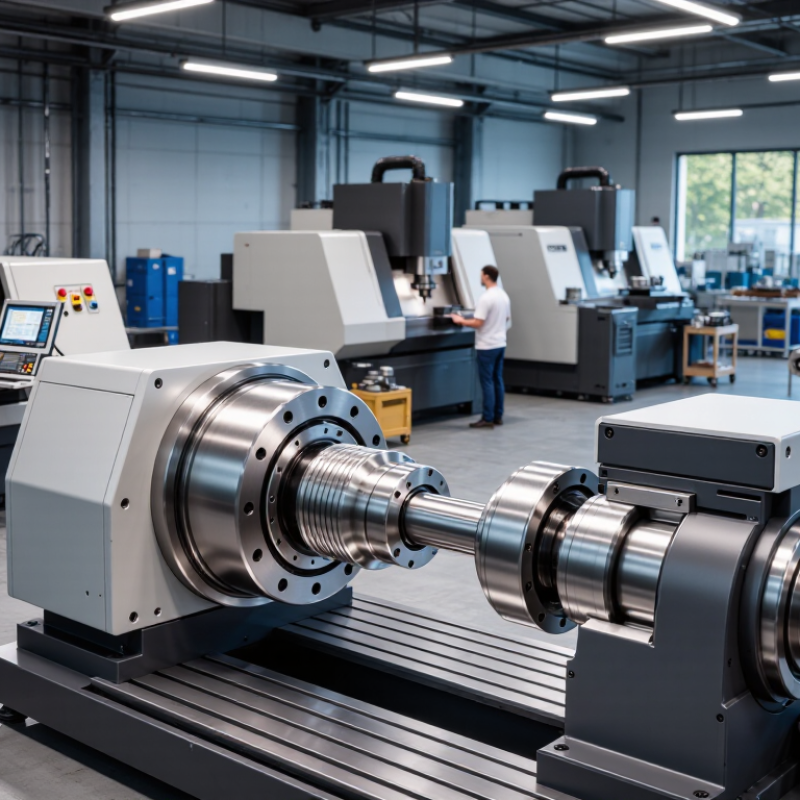
Machine spindles are the rotating cores of CNC mills, lathes, grinders, and drilling systems. They hold cutting tools, transmit torque, and determine how accurately material can be removed. In daily operation, a spindle may rotate at 8,000 rpm for steel or exceed 30,000 rpm for aluminum and composites. Speed alone does not define performance.
Common types include belt-driven, direct-drive, motorized, and air-bearing spindles. Belt-driven models offer strong torque and simpler servicing. Direct-drive designs reduce transmission losses and often improve surface finish. Motorized spindles combine the motor and shaft in one compact unit. Air-bearing versions can deliver exceptional precision, but they demand clean air, careful setup, and higher investment. Small details matter. Bearing preload, cooling method, taper design, and runout can change production results.
Industrial applications require different spindle priorities. Automotive machining often needs rigidity and sustained torque. Electronics production may require high speed and minimal vibration. Woodworking systems benefit from efficient dust protection and reliable tool changes. Buyers comparing manufacturers in 2026 should examine test procedures, balancing accuracy, thermal compensation, repair access, and documented service support. A rated speed is useful, but it does not explain behavior under load. That is where many purchasing decisions become weak. Actual cutting trials, maintenance records, and operator feedback reveal more than a polished specification sheet. Even experienced teams can overlook ambient temperature or coolant contamination. Reliable selection requires questioning the data, not simply accepting it.
For global buyers, spindle comparison should begin with process demands, not catalogue speed. The International Federation of Robotics reported 541,302 industrial robots installed worldwide in 2023, a 2% annual increase. This signals tighter integration between machining, automation, and reliable spindle performance.
Check rated power, continuous torque, maximum speed, and the power curve. A 24,000 rpm spindle may suit aluminum, but it can struggle with heavy steel cutting. Ceramic bearings, oil-air lubrication, and direct-drive motors can reduce friction and vibration. However, higher speed often increases heat. Ask for thermal displacement data after a defined warm-up cycle.
Runout matters. Very small errors.
ISO 230-2 provides a recognized method for evaluating positioning accuracy and repeatability, but buyers should also request spindle-specific test results. Compare radial runout, axial runout, balancing grade, tool-clamping force, and cooling performance. In practical trials, measure surface finish beside the machine, not only in a laboratory report.
The U.S. Department of Energy identifies compressed air and cooling systems as important industrial energy loads. Therefore, spindle efficiency includes the chiller, lubrication unit, and standby consumption. Review service intervals, bearing replacement procedures, encoder feedback, and spare-part lead times. These details rarely look impressive in sales material. They often decide production stability.
A difficult point remains. Reported accuracy may depend on temperature, tooling, and operator setup. Require repeatable test conditions, raw measurement records, and sample cutting results before selecting a manufacturer.
This benchmark compares representative spindle classes commonly specified for CNC machining in 2026. Maximum speed and rated power should be evaluated together with torque, duty cycle, cooling method, bearing configuration, runout, tool interface, and service support.
Values are representative market benchmarks rather than company or brand specifications. Confirm final performance, torque curves, thermal limits, and duty-cycle ratings with the supplier’s technical datasheet.
Choosing machine spindle manufacturers worldwide requires more than comparing catalog speeds. A reliable evaluation begins with your machining requirements. Check maximum RPM, torque curves, taper standards, cooling methods, and expected duty cycles. Ask for measured runout data, balancing grades, bearing specifications, and thermal growth results. A spindle may reach 30,000 RPM, yet perform poorly under continuous cutting loads. Request test reports from recent production units, not only laboratory samples.
Experience becomes visible in practical details. Manufacturers should explain preload control, lubrication intervals, vibration monitoring, and repair limits clearly. Review their quality system, material traceability, inspection records, and relevant international certifications. Speak with users operating similar machines. Their feedback may reveal noise after warm-up, delayed spare parts, or inconsistent service. Check technical support across time zones, response times, installation guidance, and warranty procedures. A strong supplier can discuss failure prevention without making unrealistic promises.
Tips: Compare at least three suppliers using the same technical checklist. Confirm electrical requirements, interface drawings, packaging protection, and delivery terms in writing. Calculate the full ownership cost, including adapters, maintenance, downtime, and training. Do not trust unusually low prices without evidence. I have found that impressive specifications can hide weak application support. No evaluation is perfect. Recheck assumptions after receiving actual cutting data and sample test results.
Leading Machine Spindle Manufacturers for Global Buyers in 2026
Global buyers are seeking reliable machine spindle manufacturers as high-speed machining expands. Fortune Business Insights valued the CNC machine market at USD 83.96 billion in 2023. It projects USD 140.78 billion by 2032. This growth increases demand for precise, durable spindle systems. However, supplier selection requires more than catalog speed. Buyers should examine radial runout, bearing design, thermal stability, power curves, and tested service life. ISO 230 testing records can reveal performance more clearly than sales claims.
Strong manufacturers usually provide application engineering, balancing data, installation guidance, and regional maintenance support. A spindle rated at 24,000 rpm may not suit heavy aluminum cutting. A lower-speed model could deliver better torque and longer bearing life. Check coolant compatibility, tool-interface standards, replacement-part lead times, and warranty conditions before signing a purchase contract. MarketsandMarkets reports continued growth in the global machine tool sector, driven partly by automation and smart manufacturing. Yet forecast figures cannot predict every factory’s reality.
Tips: Request a sample test using your material, tool holder, and cutting parameters. Ask for vibration limits and thermal-growth measurements. Compare delivered performance, not advertised speed. No supplier is perfect. Even experienced buyers sometimes overlook service response time, which can cost more than the spindle itself. A factory visit or live acceptance test remains valuable, though it may increase purchasing time.
| Manufacturer Capability Segment | Typical Buyer Application | Spindle Architecture | Typical Speed Range | Typical Power Range | Common Tool Interface | Bearing Configuration | Cooling Method | Key Quality and Compliance Considerations | Global Buyer Evaluation Focus |
|---|---|---|---|---|---|---|---|---|---|
| General CNC Milling Spindles | 3-axis and 4-axis machining centers for steel, cast iron, aluminum, and engineering plastics | Integrated motor spindle or belt-driven spindle | 6,000–18,000 rpm | 5.5–30 kW | BT30 BT40 CAT40 HSK-A63 | Hybrid ceramic angular-contact bearings are common in higher-speed designs; precision steel bearings are also used | Air-oil, grease, or water cooling depending on speed and duty cycle | ISO 1940-1 balancing practice, spindle runout control, thermal growth testing, and applicable CE or equivalent safety requirements | Continuous-duty rating, tool-change reliability, radial and axial runout, service availability, and compatibility with the machine control |
| High-Speed Aluminum and Composite Spindles | Aircraft components, aluminum molds, automotive parts, graphite, wood, and composite trimming | Direct-drive motor spindle with high-frequency inverter control | 18,000–40,000 rpm | 10–40 kW | HSK-A63 HSK-E50 HSK-E63 BT40 | Preloaded hybrid ceramic bearings, often arranged in matched angular-contact sets | Liquid cooling is common; air purge is used to protect the bearing cavity from dust and coolant | Dynamic balance, temperature stability, vibration level, air-purge performance, and documented overspeed testing | Maximum stable speed, acceleration and deceleration time, cutter-change repeatability, noise, and dust protection |
| Heavy-Duty Metal-Cutting Spindles | Roughing and finishing of hardened steel, stainless steel, titanium, and large castings | High-torque direct-drive or geared spindle | 3,000–12,000 rpm | 15–60 kW | BT50 CAT50 HSK-A100 | Large precision angular-contact bearing sets, frequently supported by higher-load front bearings | Oil circulation or oil-air lubrication with liquid cooling for high thermal loads | Torque-speed curve, overload capacity, thermal displacement, vibration under cutting load, and structural stiffness | Low-speed torque, peak-load duration, boring-bar support, chip and coolant sealing, and spare-parts lead time |
| 5-Axis Contouring Spindles | Complex aerospace, medical, energy, die-and-mold, and precision engineering components | Compact integrated motor spindle optimized for contouring and rapid orientation changes | 12,000–30,000 rpm | 10–35 kW | HSK-A63 HSK-A100 Capto C6 | High-precision preloaded angular-contact bearings with controlled preload and thermal compensation | Liquid cooling, air purge, and controlled lubrication systems | Low runout, thermal growth compensation, vibration behavior, orientation accuracy, and tool-clamp monitoring | Integration with rotary axes, kinematic calibration, collision protection, tool-release safety, and postprocessor compatibility |
| CNC Turning and Mill-Turn Spindles | Turning centers, live-tool lathes, mill-turn machines, and bar-fed production equipment | Built-in motor spindle or belt-driven main spindle with optional C-axis function | 2,000–8,000 rpm | 7.5–45 kW | Integrated chuck or collet interface; optional HSK, Capto, or live-tool interfaces | High-load precision roller and angular-contact bearing combinations | Oil-air, grease, or forced-oil lubrication with air or liquid cooling | Radial stiffness, axial thrust capacity, indexing accuracy, spindle orientation, and chuck compatibility | Maximum bar capacity, C-axis response, clamping force, spindle acceleration, balancing, and production-cycle durability |
| Grinding Spindles | Internal, external, surface, tool, and coordinate grinding of hardened components | High-speed electric grinding spindle or belt-driven precision spindle | 15,000–120,000 rpm | 1–30 kW | Wheel flange, collet, HSK, or application-specific grinding mount | Precision angular-contact bearings; air bearings may be used for specialized ultra-precision applications | Air cooling, liquid cooling, or oil circulation depending on speed and grinding load | Sub-micron runout, vibration, wheel-balance control, thermal drift, and bearing service life | Wheel diameter and mass limits, dressing compatibility, surface-finish capability, acoustic behavior, and balancing procedure |
| PCB and Micro-Machining Spindles | Printed circuit boards, miniature molds, electronics, dental components, and small precision parts | Compact high-frequency direct-drive spindle | 30,000–100,000 rpm | 0.8–8 kW | ER collet, HSK-E25, HSK-E32, or precision micro-tool holder | Miniature hybrid ceramic bearings with high-speed preload control | Air cooling with continuous air purge; liquid cooling is used on higher-power units | Runout at the tool nose, vibration, collet accuracy, contamination resistance, and high-frequency drive compatibility | Small-tool stability, minimum practical cutting diameter, dust extraction, replacement bearing cost, and inverter frequency range |
| Woodworking and Nested-Based CNC Spindles | Furniture panels, cabinetry, solid wood, plastics, signage, and composite sheet processing | Air-cooled or liquid-cooled direct-drive spindle | 12,000–24,000 rpm | 3.5–15 kW | ER20 ER25 ER32 ISO30 | Precision angular-contact bearings, usually sealed or protected by air purge | Air cooling for moderate duty; liquid cooling for extended industrial cycles | Dust sealing, collet concentricity, thermal stability, tool-change repeatability, and motor-inverter matching | Dust-extraction integration, duty cycle, noise, automatic tool-change support, and availability of collets and service kits |
| Special-Purpose Drilling and Tapping Spindles | High-volume holemaking, thread cutting, automotive components, and multi-spindle production systems | Direct-drive tapping spindle or compact geared drilling spindle | 4,000–24,000 rpm | 3–25 kW | BT30, BT40, HSK-A50, collet, or custom production-tool interface | High-precision angular-contact bearings with axial-load capability | Air-oil or grease lubrication; liquid cooling for continuous production | Reversal response, tapping synchronization, axial stiffness, tool-clamp force, and cycle-life validation | Rigid tapping performance, spindle orientation time, tool-change cycle time, coolant-through capability, and automation interface |
| Repairable and Retrofit Spindles | Replacement of obsolete units, machine restoration, control upgrades, and production-line life extension | Form-fit-function replacement spindle or customized motor-spindle assembly | 3,000–30,000 rpm | 2–50 kW | Existing machine-specific interface, BT, CAT, HSK, ISO, or custom nose design | Replacement bearing specification matched to original load, speed, and preload requirements | Air, liquid, or oil cooling matched to the original machine design | Dimensional compatibility, electrical pinout, encoder resolution, balancing report, insulation testing, and documented repair procedure | Mechanical fit, drive compatibility, encoder feedback, commissioning support, warranty terms, and total downtime reduction |
2026 Best Machine Spindle Manufacturers for Global Buyers
For global buyers, the best machine spindle manufacturer is not always the cheapest supplier. Purchasing teams should verify spindle speed, bearing type, runout tolerance, cooling method, and compatible tool holders. A written inspection report matters more than a polished sales presentation. Ask for test data, calibration records, and samples from recent production batches. Small details matter.
Compliance can delay an otherwise successful purchase. Confirm the required safety markings, electromagnetic compatibility documents, material declarations, and export paperwork before payment. Requirements vary by destination, machine type, and installation environment. The supplier should provide accurate manuals in an understandable language. Check the HS code with a qualified customs professional. Do not rely on an unverified quotation. I have seen attractive offers become expensive after duties, port storage, and document corrections.
Service capability deserves equal attention. Ask how quickly technical staff respond, where replacement bearings are stocked, and whether remote diagnosis is available. A clear warranty should define coverage, exclusions, response times, and transport responsibility. Packaging should protect the spindle from moisture, vibration, and sudden temperature changes. Request photos before shipment. Total cost includes commissioning, adapters, training, energy use, maintenance, downtime, and disposal. A lower purchase price can hide recurring costs. My own reviews have sometimes focused too heavily on specifications. That is a useful warning. A technically excellent spindle still fails commercially when support is slow or spare parts are uncertain.
sale@harbertpump.com,
sale@harbertpump.com