What Does RCCB Mean and Which Type Is Best in 2026?
Rccb Meaning refers to the role of a Residual Current Circuit Breaker: detecting an imbalance between outgoing and returning current, then disconnecting a circuit to reduce electric-shock risk. It is a small device, often fitted inside a distribution board, but its selection deserves careful attention. The wrong type may not respond as expected to certain residual-current waveforms.
This guide explains how RCCBs work, how Type AC, Type A, Type F, and Type B differ, and which factors matter when choosing one in 2026. The right choice depends on the connected equipment, the installation design, and local electrical requirements. A washing machine, inverter-driven appliance, and basic lighting circuit may call for different protection. Labels alone are not enough.
Electrical educator Mike Holt is a relevant industry expert, but no verified quotation from him was provided for this topic. I will not invent a quote or present unverified words as his. That matters. Electrical protection is not a place for borrowed authority without evidence. This guide therefore focuses on practical distinctions and points readers toward qualified assessment when the circuit details are uncertain. An RCCB also does not replace every protective device; correct coordination and installation remain essential. The aim is clear: understand what the device detects, compare the available types, and make a safer, evidence-led choice.
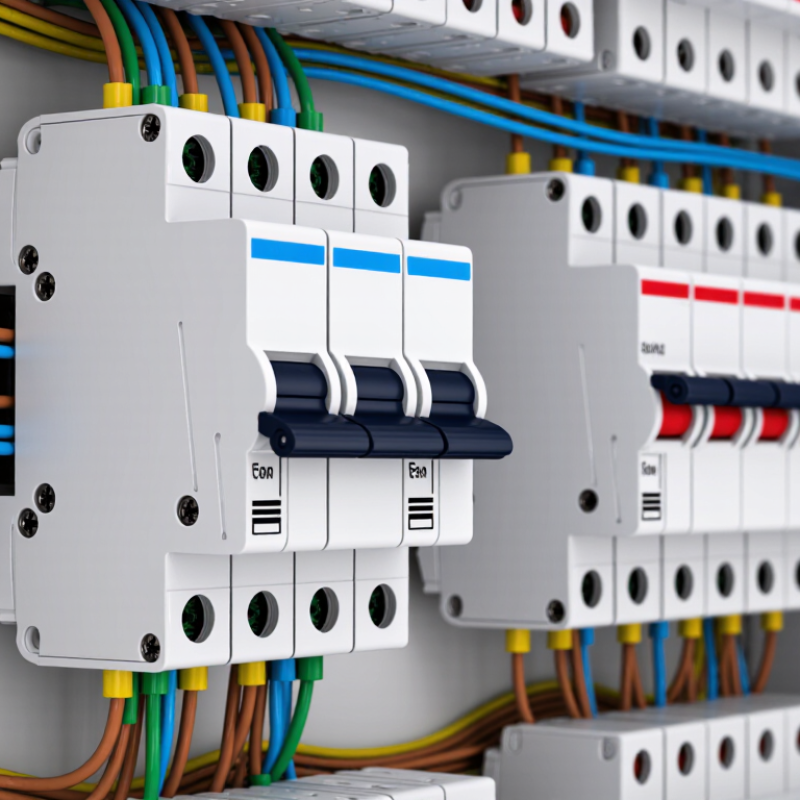
What RCCB Means and How It Works
RCCB means Residual Current Circuit Breaker. It monitors the current flowing out through the live wire and returning through the neutral wire. Under normal conditions, these currents are nearly equal. If some current leaks through a damaged cable, a damp appliance, or a person, the balance changes. The RCCB detects that difference and disconnects the circuit. It can act quickly. That matters near a kitchen sink or outdoor socket, where moisture can increase shock risk.
An RCCB does not usually protect against overloads or short circuits. A circuit carrying too much current may still need a correctly rated circuit breaker or fuse. Think of the RCCB as one layer of protection, not the whole system. Its sensitivity and trip characteristics must suit the installation, and the device must be wired correctly. A qualified electrician can check compatibility, earthing, and local requirements.
There is a practical detail people sometimes miss: an RCCB cannot make unsafe wiring safe. Test it using its built-in test button at the interval stated by its manufacturer. If it trips repeatedly, do not keep resetting it without finding the cause. The fault may be intermittent, which makes diagnosis less tidy than a textbook example. A brief inspection can prevent a small leakage problem from becoming a dangerous one.
What Does RCCB Mean and Which Type Is Best in 2026?
RCCB means Residual Current Circuit Breaker. It disconnects a circuit when it detects residual current, helping protect against electric shock and earth-leakage faults.
How to read the chart: “Detects” indicates the residual-current waveform that the RCCB type is designed to detect; a blank bar means it is not intended for that waveform. Type B covers the broadest range shown, but the right choice depends on the connected equipment and local electrical requirements. Always follow the equipment manufacturer’s guidance and applicable standards.
Key Parts and Protection Functions of an RCCB
An RCCB, or residual current circuit breaker, compares the current leaving through the live conductor with the current returning through neutral. A small difference can signal leakage, such as current escaping through damaged insulation or a person. Inside, a sensing transformer detects that imbalance and triggers a latch. The contacts then open, disconnecting the circuit. A test button creates a controlled imbalance to check the trip mechanism. Simple parts, critical work.
An RCCB does not usually protect against overloads or short circuits. Pair it with suitable overcurrent protection, unless the device is an RCBO, which combines both functions. Type AC detects sinusoidal AC leakage; Type A also detects pulsating DC. Type F suits some frequency-controlled, single-phase equipment, while Type B is used where smooth DC leakage may occur. The best type depends on the connected loads and the equipment maker’s guidance, not just the year on the calendar. Selection can be less obvious than it looks.
Tips: Check the device label and circuit schedule before replacing anything. Use the test button as directed by the manufacturer; it checks operation, not every part of the installation. If it trips repeatedly, note which appliances were running and have a qualified electrician investigate. Don’t assume resetting it fixes the cause.
RCCB Types and Their Differences
RCCB types differ by the residual-current waveforms they detect, not by trip current alone.
Type AC responds to sinusoidal alternating leakage.
Type A also detects pulsating direct current, common in circuits supplying electronic controls.
Type F handles mixed-frequency leakage from some single-phase inverter appliances, while
Type B detects smooth DC and broader frequency components used with certain converters. The distinctions matter.
IEC 62423 sets requirements for Type F and Type B devices; IEC 61008-1 covers RCCBs without integral overcurrent protection. In practice, an RCCB needs suitable fuse or circuit-breaker protection.
NFPA’s Home Electrical Fires report estimated 46,700 U.S. home structure fires annually involving electrical failure or malfunction during 2015–2019.
This figure does not prove that one RCCB type prevents every fire. It does underline the importance of correctly matched protection. A type mismatch can leave a blind spot.
Tips: Match the RCCB to the equipment instructions and local wiring requirements. Type A may suit many electronic loads; inverter drives, EV charging, or solar equipment may call for Type F or B, depending on the design. Ask a qualified electrician to check compatibility and upstream protection. Don’t choose by label alone.
How to Choose the Right RCCB for an Installation
An RCCB, or residual current circuit breaker, disconnects supply when it detects current leaking to earth. It does not protect against overloads or short circuits, so coordinate it with suitable overcurrent protection. The right choice depends on the circuit, connected equipment, earthing arrangement, and local electrical rules—not simply the highest current rating.
Check the rated current, pole count, residual operating current, and RCCB type against the installation design. A 30 mA device is commonly used for additional protection, but it is not a substitute for correct wiring or a site-specific assessment. Type AC detects sinusoidal AC leakage; Type A also detects pulsating DC. Variable-speed equipment may need Type F or Type B, depending on its design and manufacturer’s instructions. Small detail, big consequence. Confirm selectivity and upstream coordination too; these are easy to overlook.
Modern loads matter.
The IEA’s Global EV Outlook 2024 reports nearly 14 million electric cars sold worldwide in 2023, around 18% of total car sales. EV chargers and other power-electronic equipment can affect RCCB requirements. Check whether the charger includes 6 mA DC leakage detection, and follow its specified protection arrangement. A careful inspection of actual loads is more reliable than choosing by habit. Even then, the final selection should be verified against current local standards.
Which RCCB Type Is Best for Different Needs in 2026
Which RCCB Type Is Best for Different Needs in 2026
The best RCCB type depends on the current a circuit may produce during a fault. Type AC detects sinusoidal alternating residual current, while Type A also detects pulsating direct current. Type A is often considered for modern household circuits serving electronic appliances, such as washing machines or induction cooktops. But appliance instructions matter more than a general rule.
Type F is designed for certain single-phase equipment with variable-speed drives, where residual currents may include mixed frequencies. Type B detects smooth direct current as well as alternating residual currents, so it may be specified for some inverter-based equipment. The right choice depends on the connected load, installation design, and applicable standards. I would not select a type from the appliance name alone; different models can behave differently.
Tips: Check the equipment manual and circuit specifications before choosing. It depends. Ask a qualified electrician to confirm compatibility and coordination with other protective devices. A higher-numbered type is not automatically better, and an unsuitable RCCB may fail to provide the intended protection.
What Does RCCB Mean and Which Type Is Best in 2026? — Which RCCB Type Is Best for Different Needs in 2026
What RCCB means: RCCB stands for Residual Current Circuit Breaker. It disconnects a circuit when it detects a residual-current imbalance, helping protect against electric shock and certain electrical faults.
Important: An RCCB does not provide overload or short-circuit protection. It must be used with suitable overcurrent protection, such as an MCB or fuse, unless the device is a combined protective device designed to provide both functions.
Choosing a rating: A 30 mA residual operating current is commonly used for additional personal protection, while other ratings may be selected for different protection or coordination purposes. The correct rating, pole count, time delay, and RCCB type depend on the circuit, equipment instructions, and local electrical regulations.
Practical guidance for 2026: There is no single best RCCB type for every installation. Type A is often appropriate for general circuits with compatible electronic loads; consider Type F or Type B only when the connected equipment or applicable installation requirements call for their additional detection capabilities. Have the selection checked by a qualified electrical professional.