A Hopper Dredger is a specialized vessel used in marine construction and dredging. It plays a vital role in maintaining navigable waterways. The operation of a Hopper Dredger involves various technical processes, which are essential for effective sediment removal.
These dredgers efficiently gather and transport sand, silt, and other materials from the sea floor to designated disposal sites. They are crucial for creating and expanding ports, waterways, and beaches. However, their impact on marine environments warrants careful consideration and study.
Understanding how a Hopper Dredger works reveals its complex design and functionality. From its loading mechanisms to the intricacies of its hull design, every element is engineered for efficiency. Yet, while they provide significant benefits, they also pose challenges. The balance between development and ecological preservation is critical.
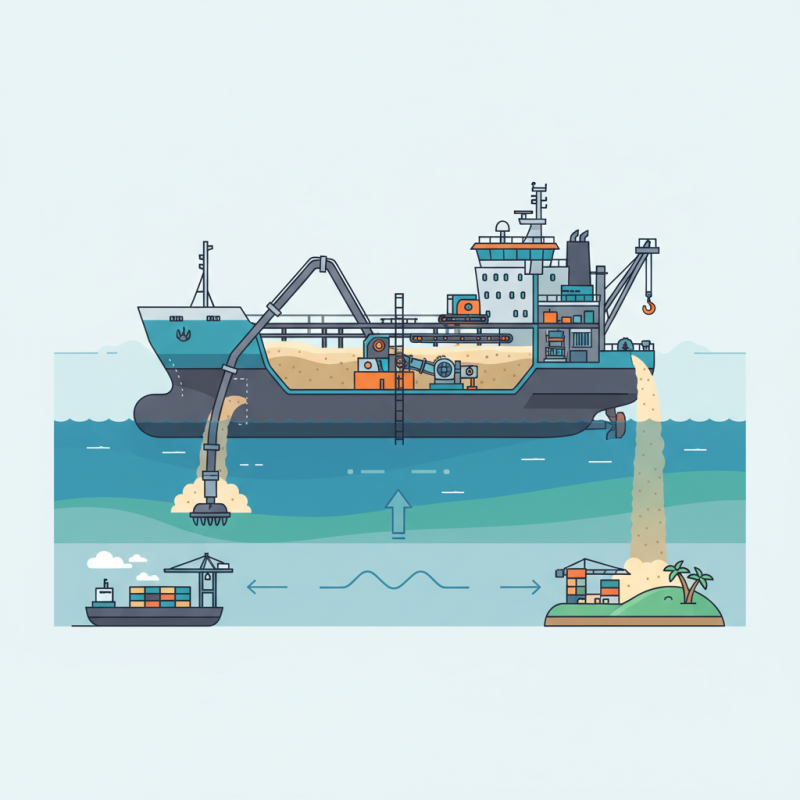
A hopper dredger is a specialized vessel used for underwater excavation. It operates primarily in marine and navigational environments. The dredger's design includes a large hold or "hopper" to collect sediment and debris from the seabed. This holds thousands of cubic meters of material, making it efficient for large-scale dredging projects.
The process begins with the dredger sailing to a designated site. Using powerful suction systems, it removes sand, silt, and other materials. Reports indicate that modern hopper dredgers can displace up to 10,000 cubic meters of material per hour. Once full, the vessel transports the load to a different location for disposal or land reclamation.
While hopper dredgers play a vital role in coastal and marine infrastructure, they also pose environmental challenges. Sediment disruption can impact local ecosystems and water quality. Balancing operational efficiency with ecological responsibility remains a key consideration in the industry. This complexity requires ongoing assessment and innovation to minimize negative effects.
Hopper dredgers have a rich history dating back to the 19th century. The early designs focused on improving efficiency in sediment removal and management. Initially, these vessels used simple mechanisms to scoop up sediments. Their effectiveness quickly caught the attention of engineers and maritime planners.
By the early 20th century, innovations such as hydraulic systems transformed dredging practices. These improvements allowed for deeper and more efficient dredging. As coastal cities expanded, the need for reliable dredging grew. Operators faced many challenges, including weather conditions and sediment types. Some designs struggled to adapt, leading to a push for more reliable and efficient options.
Technological advancements continued throughout the mid-20th century. Modern hopper dredgers are equipped with advanced navigation and sensor systems. Yet, despite these innovations, the environmental impact remains a concern. Striking a balance between efficiency and ecological responsibility still poses challenges for the industry. Learning from past practices can guide future developments in hopper dredging technology.
Hopper dredgers are specialized vessels used in dredging operations. Their design includes a hopper, which is a large compartment for storing dredged material. The efficiency of the hopper is crucial when considering material capacity. Some dredgers can hold up to 15,000 cubic meters of sediment, making them ideal for large projects.
One important feature is the draghead, which facilitates material intake from the seabed. This component is equipped with a series of suction pipes designed for optimal sediment capture. Dredging depth can reach over 30 meters in some cases, allowing access to various underwater terrains. Additionally, the hull design minimizes resistance. Advanced technologies have improved performance, yet challenges remain in balancing efficiency with environmental concerns.
Modern hopper dredgers incorporate various methods for sediment disposal. Approximately 70% of dredged material is often returned to the sea. This practice raises questions about ecosystem impact. While they are efficient, some reports emphasize the need for better monitoring systems to track sediment dispersal. This highlights that while technology improves operations, environmental considerations cannot be overlooked.
This chart represents the average capacity and operational efficiency of hopper dredgers, measured in cubic meters (m³) and operating hours per day. The data showcases the relationship between the capacity of different types of hopper dredgers and their efficiency in operation.
Hopper dredgers are specialized vessels designed for underwater excavation. They scoop up sediment, sand, and debris from the sea floor. This process starts when the dredger approaches a designated area. It opens its hoppers, allowing it to collect materials during the dredging.
Once the hoppers are filled, they close to contain the material. The dredger then navigates to a disposal site. Upon arrival, the vessel dives into the water. It releases the collected sediment, often creating new landforms or deepening navigation channels. This operation requires careful planning and precise execution.
While hopper dredgers are effective, there are challenges. Environmental concerns arise due to possible habitat disruption. Dredging not only alters the seabed but also affects local ecosystems. Continuous monitoring is vital to minimize negative impacts. Operators must remain vigilant, balancing operational efficiency with ecological responsibility. Each project may pose unique obstacles, prompting reflection on sustainable practices in dredging operations.
Hopper dredgers play a significant role in maintaining navigable waterways. However, their operations raise environmental concerns. Sediment removal can disrupt local ecosystems and affect water quality. Proper management is crucial to minimize these impacts.
During dredging, suspended sediments may harm aquatic life. The disturbed sediments can release pollutants trapped in the substrate. It is essential to conduct environmental assessments before commencing operations. These studies help identify sensitive areas that require extra precautions.
Tips for responsible dredging include monitoring water quality continuously. Implementing technology for real-time assessments can reduce harm. Consider using silt curtains to limit sediment spread. Collaborating with environmental experts ensures compliance with regulations, improving project sustainability. Ultimately, waterway maintenance should consider both operational needs and ecological health.
sale@harbertpump.com,
sale@harbertpump.com