Domestic sewage pumps play a vital role in effective home waste management. According to a report by the Environmental Protection Agency (EPA), improper sewage disposal can contaminate water sources. This threatens public health and the environment. In fact, nearly 40% of U.S. households rely on septic systems. These systems often require reliable pumps for effective waste transport.
The need for domestic sewage pumps is increasing. In urban areas, aging infrastructure can pose issues. Many homes connect to municipal systems. However, when gravity fails, these pumps become essential. They help lift waste from lower to higher elevations. This ensures proper waste removal and decreases the risk of backups.
Moreover, maintenance of these pumps is crucial. Regular checks can prevent costly repairs. According to industry studies, nearly 20% of sewage pump failures are due to neglect. Homeowners should be aware of the signs of wear. Investing in quality pumps is wise for long-term savings. Ultimately, domestic sewage pumps are the backbone that supports safe and effective waste management in homes.
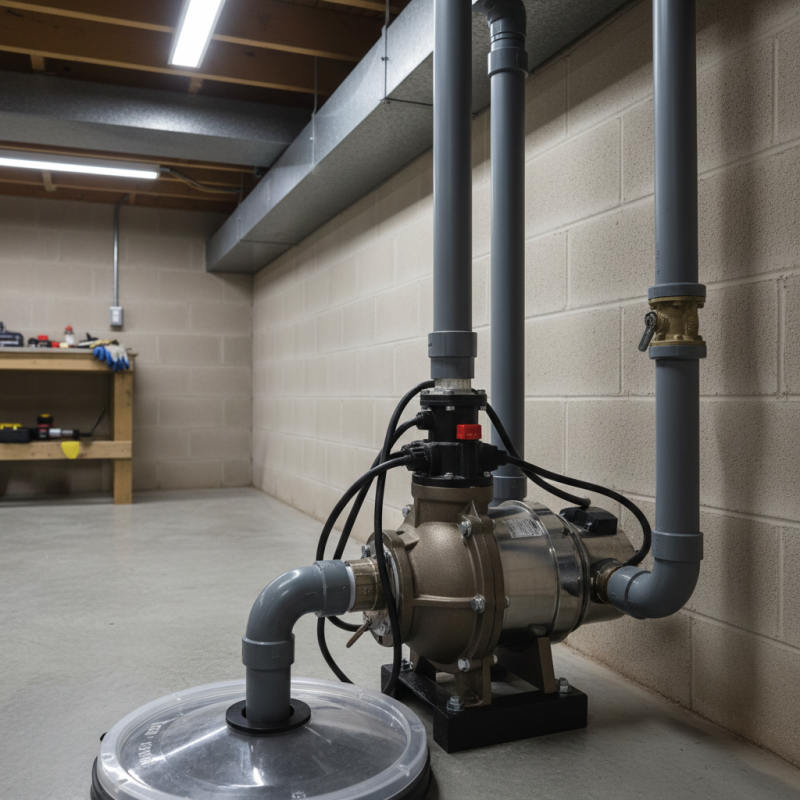
Domestic sewage pumps play a crucial role in waste management within homes. These pumps operate by transporting wastewater from various sources, such as bathrooms and kitchens, to a sewage treatment area. According to the Environmental Protection Agency, around 26% of American households rely on septic systems, which often necessitate efficient pumping mechanisms to function effectively. Without these pumps, sewage backups can occur, leading to costly repairs and health hazards.
The function of domestic sewage pumps is vital, especially in areas with low drainage. They help prevent sewage from seeping into homes and surrounding areas. In fact, a study by the Water Environment Federation indicates that improper sewage management can lead to severe environmental contamination. The installation of a quality sewage pump can significantly mitigate these risks.
However, not all pumps are created equally. Some homeowners underestimate the importance of regular maintenance. Neglecting this can result in mechanical failures and unpleasant odors. It's essential to be aware of the signs indicating pump issues. Keeping track of these details can ensure a healthier home environment and safeguard local ecosystems.
Waste management is crucial in residential areas. A report from the Environmental Protection Agency (EPA) states that improper waste disposal can lead to serious health issues. Contaminated water and soil are often direct consequences of poor waste handling. Families may not realize the risks until it is too late.
Domestic sewage pumps play a vital role here. They help in transporting waste to treatment facilities. This not only keeps homes clean but also protects local ecosystems. Statistics show that homes using sewage pumps reduce overflow incidents by 70%. However, many homeowners overlook regular maintenance. This negligence can lead to pump failures. When pumps malfunction, sewage can back up into homes, creating unhygienic conditions.
Furthermore, education on waste disposal is lacking. Many people are unaware of what can be safely disposed of through sewage systems. Items like wipes and feminine products can cause blockages. The National Sanitation Foundation suggests community programs to raise awareness. Without these efforts, waste management will struggle. The responsibility lies with us to ensure proper disposal practices.
This chart illustrates the average percentages of various waste types managed by domestic sewage pumps in residential areas.
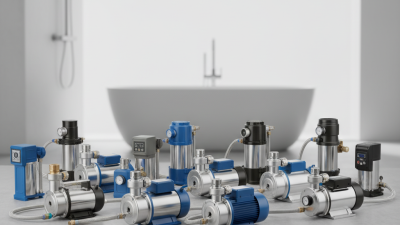
Domestic sewage pumps play a vital role in managing waste effectively. There are various types of pumps designed for different needs in homes. Each type has its own features catering to specific situations.
One common type is the submersible sewage pump. This pump operates while submerged in waste, making it efficient for draining wastewater. Its compact size allows it to fit in tight spaces, which is a plus for many home setups. However, this pump can be challenging to maintain due to its submerged nature, often requiring more attention than surface models.
Another popular option is the effluent pump. This pump handles greywater, which includes water from sinks and showers. It’s less powerful than sewage pumps but has a vital role in moving treated water. The drawback is that it may not handle solid waste effectively, leading to clogs. Homeowners should choose wisely based on their waste types. Each pump has its strengths and weaknesses, calling for careful evaluation before installation.
| Pump Type | Description | Key Features | Applications |
|---|---|---|---|
| Submersible Sewage Pump | Designed to be submerged in sewage while pumping waste fluid. | Durable construction, automatic operation, high efficiency. | Residential waste management, basements, and raw sewage applications. |
| Pedestal Sewage Pump | Pump mounted on a pedestal above the sump pit to handle sewage. | Easy maintenance, suitable for smaller spaces, good for home use. | Home wastewater systems, above-ground applications. |
| Grinder Pump | Equipped with sharp blades to grind sewage into smaller particles. | Handles solids effectively, compact size, reduces clogging. | Septic systems, rural housing, and areas with low sewer accessibility. |
| Effluent Pump | Used to pump treated effluent from septic tanks. | High flow rate, non-clogging design, energy efficient. | Drain fields, septic system maintenance. |
When selecting a domestic sewage pump, several factors are crucial. Consider the pump's capacity. It should handle the volume of waste produced by your household. A pump that is too small can lead to clogs and backups. Think about the type of sewage generated. Different pumps suit various waste types. For instance, some pumps handle solid waste better than others.
Another important factor is energy efficiency. An energy-efficient pump can significantly reduce utility bills. Look for a pump that offers good performance without consuming excessive power. Additionally, installation requirements differ. Some pumps need more space or special connections. Assess the available space in your home before making a choice.
Finally, pay attention to maintenance needs. Some pumps require regular servicing to function well. A pump that demands frequent checks can be a hassle. It's essential to balance convenience with performance. Consider these factors carefully to find the right sewage pump for your home.
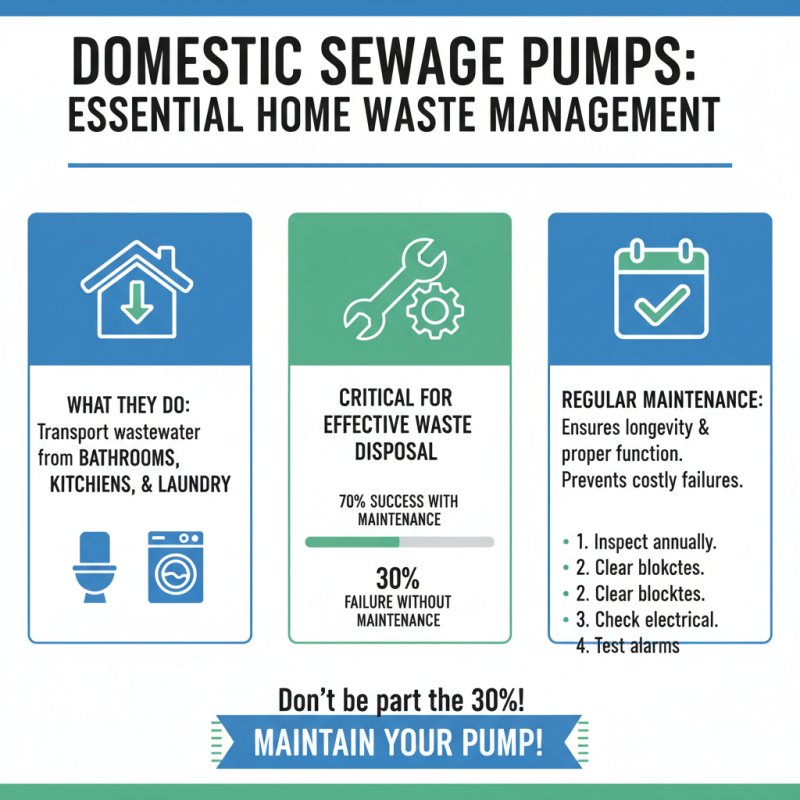
Domestic sewage pumps are critical for effective waste management in homes. They help transport wastewater away from bathrooms, kitchens, and laundry areas. Regular maintenance is needed to ensure these pumps function properly for years. According to industry reports, nearly 30% of sewage pump failures are due to lack of maintenance.
Conducting routine inspections can prevent common issues. Homeowners should check for clogs regularly. Clogs can lead to backup and costly repairs. Cleaning the inlet and discharge lines keeps the pump running smoothly. A simple visual inspection can reveal wear and damage. Replacing worn seals and gaskets early can save significant costs later.
Additionally, it’s essential to listen for unusual noises from the pump. Strange sounds might indicate mechanical problems. Addressing these early is crucial. Experts recommend changing the oil in submersible pumps annually. Data shows that this simple practice can double the lifespan of these pumps. Ignoring these maintenance practices leads to worse outcomes. Take time to invest in proper care for your sewage pump.
sale@harbertpump.com,
sale@harbertpump.com