
Choosing String Wound Filter Cartridges is not simply a matter of selecting the smallest micron rating. Process fluid, temperature, pressure, viscosity, and contaminant shape all influence real performance. A cartridge that looks suitable on paper may clog quickly in a high-solids water line. That mistake is common.
Grand View Research’s Industrial Filtration Market Analysis identifies rising demand for reliable filtration across water treatment, chemicals, food processing, and manufacturing. MarketsandMarkets’ filtration studies also highlight stronger attention to operating cost, service life, and process consistency. These reports describe broad filtration markets, not only String Wound Filter Cartridges. Their findings still reveal an important direction: buyers increasingly evaluate total performance instead of purchase price alone.
Professor Roger Wakeman, a respected filtration researcher, offers a useful engineering reminder: “Filter selection must reflect the process, not just the particle size.” The principle is practical. A 5-micron cartridge may remove target particles, yet its winding pattern may create excessive pressure loss. Fiber material matters too. Polypropylene suits many general applications, while cotton or glass fiber may fit different chemical and temperature conditions. Always check compatibility.
Start with facts.
Measure inlet pressure, flow rate, and contaminant loading. Review the fluid temperature and chemical profile. Then compare cartridge length, core strength, micron rating, and replacement intervals. Manufacturer claims require verification under operating conditions. This is where many guides oversimplify. A perfect selection rarely exists. The better choice balances clarity, service life, pressure stability, and maintenance effort. This article explains that decision process with practical criteria, documented data, and room for careful reassessment.
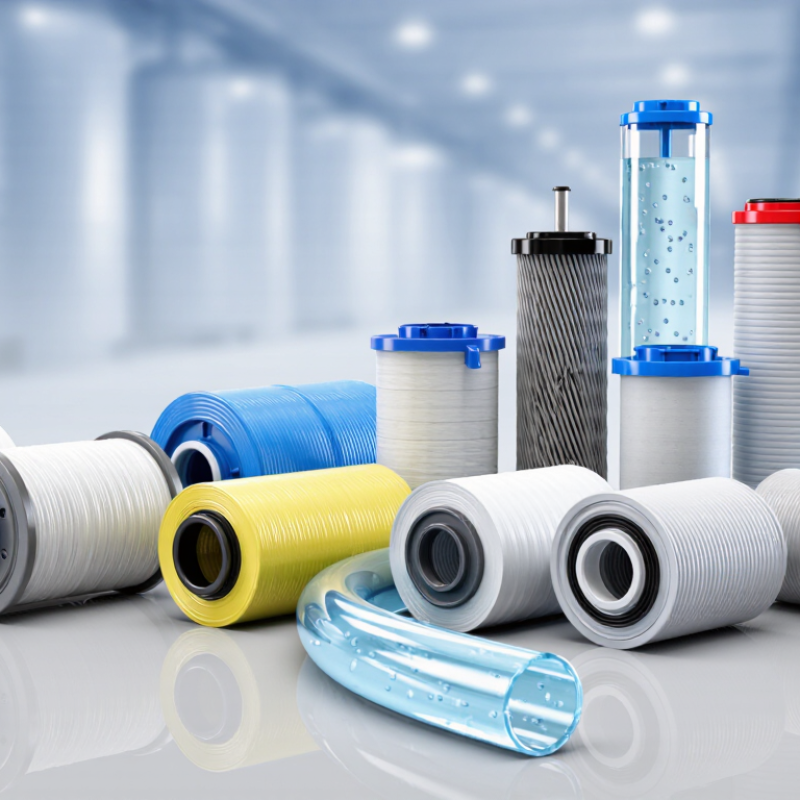
String wound filter cartridges are built by wrapping yarn around a perforated core. The winding pattern creates channels that capture particles through depth filtration. Looser outer layers trap larger debris, while tighter inner layers retain smaller particles. This graded structure can extend dirt-holding capacity, but it is not automatically the best choice for every liquid.
Construction affects performance more than the printed micron number. Nominal ratings may remove most particles at a stated size, while absolute ratings indicate tighter control. The difference matters in process water, chemicals, and prefiltration. The WHO Guidelines for Drinking-water Quality recommend turbidity below 1 NTU for effective treatment, with lower levels preferred. A 2024 MarketsandMarkets report also estimates continued growth in the water filtration market, driven by stricter quality demands. Still, market growth does not guarantee cartridge quality. I often find that compatibility testing is overlooked. Yarn material, core type, temperature, viscosity, and pressure drop must be checked together.
Tips: Compare the cartridge’s actual flow curve, not only its micron label. Check pressure loss at the intended flow rate. Inspect the used cartridge after service. Uneven discoloration can reveal channeling or poor sealing. A small pilot test is wiser than a costly assumption. Reconsider the specification if the cartridge clogs too quickly or releases fibers.
How to Choose String Wound Filter Cartridges?
Identifying the contaminant is the real starting point. Sediment, rust, pipe scale, and sand require different control strategies. A string wound cartridge traps particles through a graded depth structure. It suits uneven particle loads better than a simple surface screen. However, a five-micron rating does not guarantee complete removal. Micron ratings can be nominal or absolute, and test methods differ.
The U.S. Environmental Protection Agency reports a turbidity performance target of 0.3 NTU for many conventionally filtered public water systems. The World Health Organization recommends turbidity below 1 NTU where effective disinfection is required. These figures show why particle control matters. They do not replace site testing. Measure turbidity, particle size, flow rate, temperature, and pressure loss before selecting the cartridge. Organic color or oil needs different media. Microbial risks need validated disinfection, not ordinary wound filtration alone. A common mistake is choosing finer filtration too early. It may increase replacement frequency and reduce usable flow.
Tips: Collect a dirty-water sample after several operating hours. Check the cartridge surface and cut it open carefully. Rust near the outer layer suggests upstream corrosion. Mud deep inside suggests true depth loading. Compare inlet and outlet pressure weekly. Small records help.
In field maintenance, contaminant levels often change after repairs or seasonal rainfall. That makes one laboratory sample incomplete. Recheck the system. Filtration decisions are sometimes less precise than expected, and that is worth acknowledging.
| Filtration Requirement | Typical Contaminant | Recommended String-Wound Configuration | Common Nominal Micron Range | Selection Considerations |
|---|---|---|---|---|
| Removal of visible sediment from process or utility water | Sand, rust, silt, pipe scale and other coarse particles | Polypropylene or polyester yarn wound on a rigid, compatible core | 10–50 µm | Use a larger micron rating for high solids loading or as a prefilter. Confirm that the cartridge dimensions match the housing. |
| Fine particulate protection for downstream equipment | Fine silt, fine rust particles and suspended solids | Tightly wound polypropylene or cotton yarn with controlled winding density | 1–10 µm | Finer cartridges generally create higher pressure drop and may require more frequent replacement. Check the filter’s stated rating method. |
| Protection of reverse-osmosis or membrane systems | Suspended solids that can foul or block membrane surfaces | Low-shedding polypropylene string-wound prefilter | 1–5 µm | Select a rating appropriate to the membrane supplier’s pretreatment requirements and maintain adequate flow at the expected differential pressure. |
| Removal of oil-containing or hydrocarbon-bearing particles | Oil-wetted solids and particulate matter in industrial fluids | Polyester or another chemically compatible yarn; hydrophobic media may be appropriate | 5–25 µm | String-wound cartridges remove particles, not dissolved oil. Verify media, core and gasket compatibility with the specific hydrocarbon. |
| Filtration of acidic or alkaline process liquids | Suspended process solids in fluids with non-neutral pH | Chemically resistant polypropylene or suitable synthetic yarn and core | 5–50 µm | Review chemical compatibility, operating temperature and exposure time. Compatibility can vary with concentration and temperature. |
| Use with potable-water treatment equipment | Sediment, rust and suspended particles | Materials certified or approved for the intended potable-water application | 1–20 µm | Verify applicable drinking-water contact requirements for the installation location. A sediment cartridge does not remove dissolved chemicals or microorganisms unless specifically designed and certified to do so. |
| High dirt-loading applications | Large quantities of suspended solids, including silt and scale | Gradient-density or progressively tighter winding pattern | 5–50 µm | A larger cartridge or a staged filtration arrangement can extend service life. Ensure the housing has enough space for the selected length and diameter. |
| Low extractables and low fiber-shedding requirements | Particles or fibers released by unsuitable filter materials | Melt-spun or high-quality synthetic yarn with a robust core | 1–25 µm | Request extractables, cleanliness and integrity information when the filtered fluid is sensitive or requires controlled contamination levels. |
| Parameter | Why It Matters | Practical Check |
|---|---|---|
| Micron rating | Indicates the approximate particle size the cartridge is intended to retain. | Determine whether the rating is nominal or absolute; these terms are not interchangeable. |
| Flow rate and pressure drop | Affects pump demand, process capacity and replacement timing. | Compare clean pressure-drop data at the required flow and fluid viscosity. |
| Cartridge dimensions | Determines whether the cartridge seals correctly inside the existing housing. | Confirm length, outside diameter, inside diameter, end configuration and gasket or O-ring type. |
| Media and core compatibility | Prevents swelling, degradation, shedding or structural failure. | Check fluid chemistry, concentration, temperature and exposure duration. |
| Operating temperature | Temperature can change material strength, chemical resistance and flow behavior. | Use the manufacturer’s maximum operating temperature for the complete cartridge assembly, not only the yarn. |
| Replacement endpoint | A loaded cartridge can restrict flow and increase energy consumption. | Set a differential-pressure limit based on the housing and process requirements, and replace the cartridge before bypass or damage occurs. |
Choosing a string wound filter cartridge starts with the fluid, not the catalog. Polypropylene suits many aqueous applications, while cotton or polyester may fit specific temperature and chemical conditions. Always check compatibility charts and operating temperature. Material failure can begin as swelling, fiber shedding, or a distorted core.
Micron rating needs careful interpretation. A nominal 5-micron cartridge does not capture every 5-micron particle. Absolute ratings provide tighter control, but testing methods must be comparable. ISO 16889 uses multipass testing and beta ratios to measure particle removal performance. The World Health Organization recommends turbidity below 1 NTU for effective disinfection, when practical. That target shows why a “small micron number” is not enough. Dirt loading, flow rate, and upstream water quality matter too.
Dimensions are equally practical. Measure cartridge length, outside diameter, inside diameter, end configuration, and core size. A cartridge can fit loosely yet leak around the seal. Check housing clearance and available pressure drop. The U.S. EPA’s drinking-water treatment guidance commonly links filtration performance with turbidity control, but field conditions rarely match laboratory data. That is the uncomfortable part. Published capacity may not survive high sediment loads. Select a slightly larger surface area when pressure stability matters, then verify performance through pressure readings, flow checks, and scheduled replacement records.
Choosing string wound filter cartridges starts with the actual flow requirement, not the largest advertised capacity. Record normal flow, peak flow, fluid viscosity, and operating temperature. A cartridge handling water may perform very differently with oil or a concentrated process liquid. Higher viscosity usually increases pressure drop.
Check the cartridge’s recommended flow range and differential pressure limits. The housing must also withstand the system’s maximum pressure and temperature. Monitor pressure before and after the filter during operation. Replace the cartridge when differential pressure reaches the process limit, rather than relying only on a calendar schedule. Small details matter.
Chemical compatibility deserves equal attention. Confirm the winding material, core material, end caps, and seals against the complete fluid composition. Acids, solvents, oxidizers, and high-pH solutions can weaken certain materials or release unwanted particles. Temperature can make compatibility worse. Request test data when the fluid is unusual.
In practical selection work, I would test a sample cartridge under real flow conditions before approving a full installation. Laboratory data helps, but it cannot reproduce every pressure change or contaminant load. No selection is perfect on paper. A cartridge with a finer rating may improve clarity, yet clog sooner and increase maintenance. Review pressure trends after installation, then adjust the choice when evidence disagrees with the original plan.
Service life depends on sediment load, flow rate, water temperature, and cartridge depth. A string wound cartridge traps particles through its graded structure. The outer layers catch larger debris, while inner layers retain finer material. Track inlet and outlet pressure with gauges. A rising pressure difference signals clogging more reliably than calendar dates.
The U.S. EPA’s 2023 Drinking Water Infrastructure Needs Survey estimates $625 billion will be needed over 20 years for drinking water improvements. That figure reinforces a practical lesson: preventive maintenance protects equipment and reduces avoidable replacement costs. Replace a cartridge when pressure loss reaches the equipment maker’s limit, flow drops noticeably, or water quality changes. Do not wait for complete blockage.
I still replace cartridges too early sometimes, especially after unusual construction nearby. That is wasteful, but ignoring the warning signs is worse.
Record installation dates, pressure readings, flow rates, and visible sediment. These records create a defensible replacement schedule.
Tips:
Keep one unused cartridge sealed and nearby. Inspect the housing seal during every change. Sanitize reusable housings according to the system procedure. If pressure rises quickly, investigate the source instead of changing cartridges repeatedly.
The World Health Organization’s Guidelines for Drinking-water Quality recommend risk-based monitoring, supporting regular checks rather than relying on appearance alone. A clear cartridge can still be overloaded.
sale@harbertpump.com,
sale@harbertpump.com