Choosing the right water booster pump system is crucial for various applications, from residential to commercial uses. A water booster pump system ensures optimal water pressure and consistency, addressing common issues like low water flow. According to a recent report by the International Water Association, approximately 40% of urban areas face challenges related to insufficient water pressure.
Selecting an appropriate pump can be overwhelming. The market offers diverse options tailored to specific needs. Factors like system size, flow rate, and installation location play a vital role in the decision-making process. For example, homeowners may need compact systems for efficiency. In contrast, larger facilities may require high-capacity solutions that can manage fluctuations in demand effectively.
Investing time in understanding these factors is essential. Knowledge of energy consumption and maintenance requirements can minimize long-term costs. While many assume a larger pump is better, that’s not always the case. A mismatched system can lead to inefficiency and unnecessary expenses. Therefore, thorough research and professional guidance can significantly enhance the selection process.
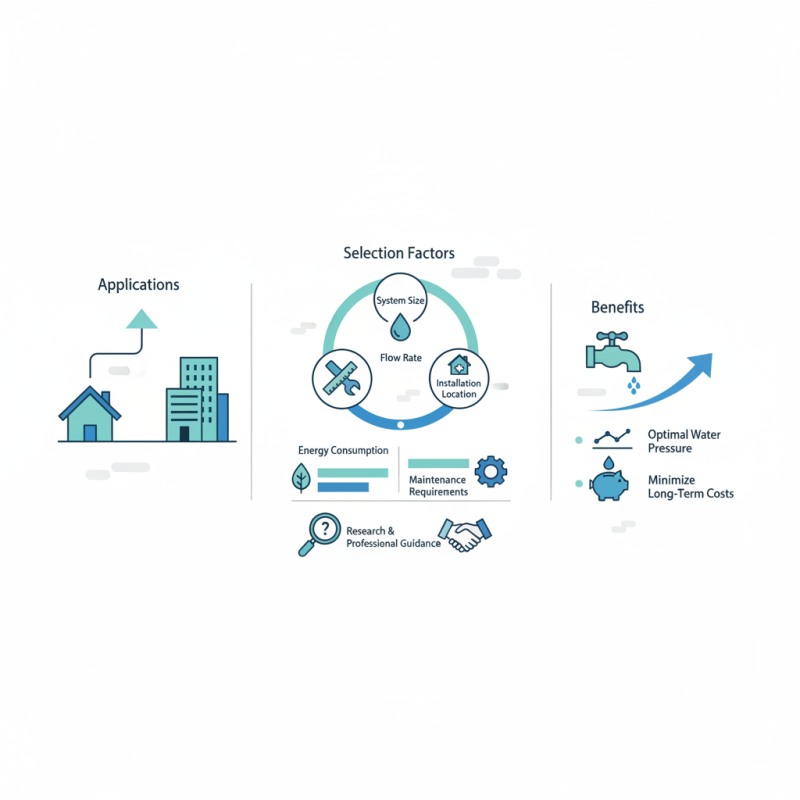
Understanding the basics of water booster pump systems is crucial for making informed decisions. These systems enhance water pressure, ensuring efficient water delivery in various applications. According to industry reports, nearly 40% of residential users experience insufficient water pressure at some point. This can lead to frustration and inefficiency in everyday tasks like showering or washing dishes.
A key component of these systems is the pump itself. There are different types of pumps, such as centrifugal and positive displacement pumps. Each serves specific needs. Centrifugal pumps are ideal for larger buildings, while smaller homes may only require positive displacement pumps. Research shows that selecting the right type can improve water flow efficiency by up to 30%. Users often overlook the importance of flow rate and pressure rating in their selection process.
While it may be tempting to choose based solely on price, long-term reliability should also be considered. Quality components can prevent costly repairs and outages. An analysis of maintenance data indicates that nearly 25% of pump failures stem from improper installation or selection. Therefore, understanding your specific requirements will lead to better decisions and satisfaction over time.
This bar chart compares the flow rates of different water booster pump models. Selecting the right pump involves considering flow rate specifications according to your water demand needs.
When looking for the right water booster pump system, it is crucial to assess your specific water pressure needs. Many homeowners experience low water pressure. It can result in poor shower experiences and inefficient water usage. Understanding your water system's demands provides the first step in choosing an effective pump.
Check the plumbing layout in your home. Determine how many outlets rely on water pressure. Are you running multiple showers at once? Do you fill large tanks or irrigation systems? These factors dramatically influence the type of pump you'll need. A well-optimized system can enhance your comfort and save time.
**Tips:** Measure the current water pressure using a gauge. If it falls below 40 psi, consider a booster pump. Also, assess peak demand times, such as mornings or evenings. This may reveal if a larger pump is necessary. Consider the pump's flow rate, usually measured in gallons per minute (GPM).
Keep in mind the installation type. Some pumps are best suited for homes with low pressure. Others work well when boosting pressure at a single location. Reflect on your unique situation to find the best approach. Balancing efficiency with user experience will lead to better choices.
| Parameters | Low Pressure Requirement | Medium Pressure Requirement | High Pressure Requirement |
|---|---|---|---|
| Desired Pressure (PSI) | 30-40 | 40-60 | 60+ |
| Average Flow Rate (GPM) | 5-10 | 10-20 | 20+ |
| Typical Applications | Residential homes Small gardens |
Medium-sized homes Light commercial use |
Large Commercial setups Industrial applications |
| Pump Types Recommended | Single-stage pumps Positive displacement pumps |
Multi-stage centrifugal pumps Booster pumps |
High-efficiency multi-stage pumps Variable speed pumps |
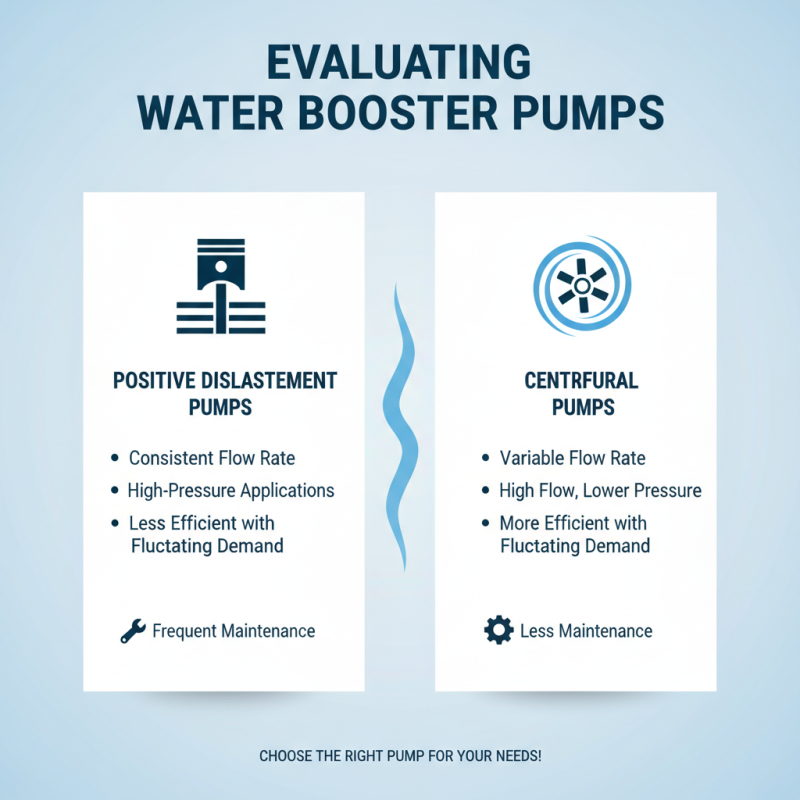
When selecting a water booster pump system, evaluating different types is essential. There are primarily two categories: positive displacement pumps and centrifugal pumps. Positive displacement pumps are known for delivering a consistent flow rate. These pumps push water through the system, making them effective for high-pressure requirements. However, they can be less efficient with fluctuating demand and may require frequent maintenance.
Centrifugal pumps, on the other hand, are popular for their simplicity and reliability. They work by converting rotational energy into kinetic energy, allowing for higher flow rates. They can be a great choice for residential applications. However, they may struggle with low-flow conditions, leading to dry running issues. Choosing the right type depends on your specific needs, such as the required flow rate and pressure levels.
Consider the installation space. Some pumps have larger footprints, while others are compact. This can affect your choice significantly. Your water quality is also crucial. Sediment and impurities can impact pump longevity. Always assess your water supply prior to making a decision. A small error in selection can lead to inefficiencies or costly repairs down the line.
Choosing the right water booster pump system involves considering several key features. One critical aspect is the pump's flow rate. The flow rate, measured in gallons per minute (GPM), indicates how much water the pump can deliver. According to industry reports, a typical residential building may require flow rates between 5 to 20 GPM. Evaluating your specific water needs is essential.
Another vital factor is the pressure rating. Pressure, measured in pounds per square inch (PSI), determines the effectiveness of water delivery. A booster pump should usually provide at least 30 PSI to ensure adequate performance in most applications. Depending on your system design, you might need higher pressure ratings. Additionally, check noise levels; quieter pumps enhance comfort in living spaces.
Energy efficiency is also important. Pumps with variable speed drives can adjust their operation based on demand, leading to energy savings. Reports suggest that energy-efficient pumps can reduce electricity costs by up to 50%. However, these pumps often come with a higher upfront cost. Balancing immediate investment with long-term savings requires careful thought. When selecting a pump, reflect on both your current usage and future demands to make an informed decision.
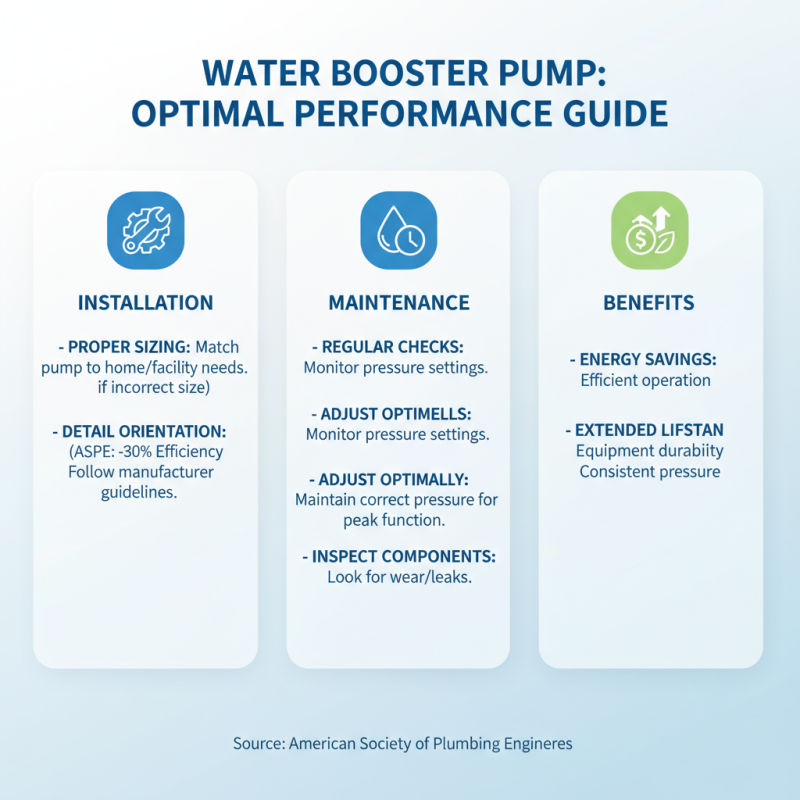
When installing a water booster pump system, attention to detail is crucial. Ensure that the pump is appropriately sized for your home or facility's needs. A report by the American Society of Plumbing Engineers indicates that improperly sized pumps can reduce efficiency by up to 30%. This inefficiency can lead to increased energy bills and decreased lifecycle of the equipment. Regularly checking and adjusting the pressure settings can maintain optimal performance.
Maintenance is equally essential. Clean the filter and inspect the fittings regularly. Neglecting these tasks may result in a decrease in water flow, with studies showing that 25% of pumps fail due to lack of maintenance. Some systems benefit from annual professional check-ups. These services can identify potential issues before they become major problems. A consistent maintenance schedule can ultimately extend the life of your water booster pump system.
Watch for signs of wear and tear. Unusual noises or vibrations are red flags and should not be ignored. They could indicate serious internal issues. Remember that even quality systems require attentive upkeep. Regular attention to both installation and maintenance will ensure reliable and efficient water pressure, thereby enhancing your overall experience and satisfaction with your water supply.
sale@harbertpump.com,
sale@harbertpump.com