
Choosing the China Best Heat Sealing Cover Tape Supplier requires more than comparing prices. It requires evidence from production floors, laboratories, and customer audits. Heat Sealing Cover Tape protects sensitive electronic components inside carrier tape. Its sealing window affects component security, packing speed, and factory yield.
Industry forecasts support this demand. SEMI’s World Fab Forecast reports continued global semiconductor capacity expansion through 2025. More devices require dependable packaging materials. Meanwhile, packaging studies from Yole Group emphasize tighter component dimensions and higher assembly precision. These trends increase pressure on cover tape suppliers. A small sealing defect can expose components to dust, moisture, or movement during transport.
The best supplier should provide measurable data. Look for peel-strength results, sealing-temperature ranges, antistatic performance, and lot traceability. ANSI/EIA-481 guidance also helps buyers check carrier-tape packaging compatibility. A reliable factory should show test records, not only polished product photos. Ask to inspect the coating line. Watch how operators control tension, temperature, and roll winding. Details matter.
Real experience also reveals limitations. Not every tape suits every carrier material or sealing machine. I would not call a supplier “best” without testing samples under actual production conditions. That judgment needs humility. Compare trial results from several batches, then review failure rates and delivery consistency. Suppliers with ISO-based quality systems, export experience, and responsive technical teams usually offer stronger long-term value. China remains a major manufacturing base, but location alone proves nothing. Performance does.
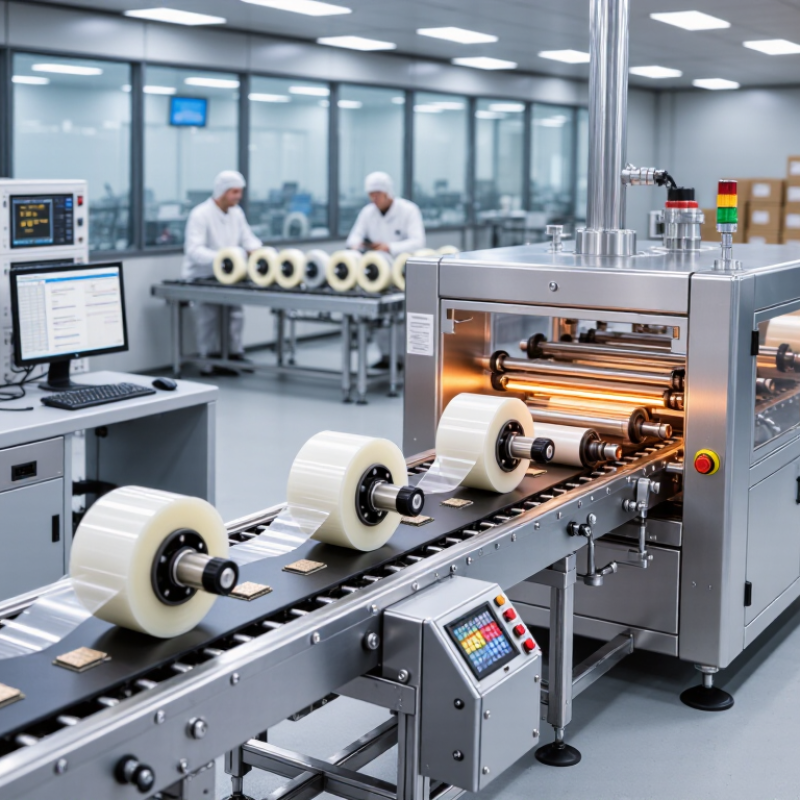
Heat sealing cover tape closes the pockets of carrier tape during electronic component packaging. The carrier tape holds each component in a precise cavity. A sealing layer bonds to the tape’s surface after controlled heat and pressure are applied.
The process is simple, but not forgiving. A sealing head warms the tape while rollers maintain contact. The adhesive softens, wets the carrier surface, and forms a continuous bond. During removal, the tape should peel smoothly without lifting components or leaving heavy residue. Seal temperature, dwell time, pressure, and tape tension must match the carrier material.
Small errors matter.
SEMI’s World Fab Forecast 2024 reported global semiconductor capacity approaching 30 million wafers per month. That scale increases demand for stable, automated component packaging. IPC/JEDEC J-STD-033D also emphasizes moisture control and handling discipline for moisture-sensitive devices. Heat sealing alone cannot prevent moisture damage; packaging materials and storage conditions still matter.
In practical trials, I would check peel force across the roll, not only at one point. Dust, uneven cavities, and changing room humidity can alter results. This is where supplier claims need verification. A reliable supplier should provide sealing-window data, lot traceability, peel-test results, and compatibility guidance for the selected carrier tape. Sometimes, a slightly lower seal temperature performs better. Production reality can disagree with the datasheet.
Cover tape protects electronic components inside carrier pockets during storage and transport. Its material selection directly affects sealing reliability, peel behavior, and component visibility. A typical structure uses a PET or polyolefin base film, a heat-activated adhesive layer, and an antistatic coating. PET offers strong dimensional stability and clear inspection. Polyolefin may provide better flexibility for certain packaging conditions. The adhesive must bond firmly without leaving residue on the carrier tape.
Performance testing should reflect real production conditions. Measure peel force after sealing, not only immediately after application. Temperature, pressure, dwell time, and line speed can change the result. A stable tape opens smoothly without sudden tearing. It should also resist curling near the pocket edge. Clear film helps operators inspect small components under normal lighting. Antistatic performance is equally important, especially when sensitive devices move through high-speed equipment.
In practical trials, test rolls from different production batches. Small variations can affect sealing width and peel consistency. A tape may appear transparent but still create glare during camera inspection. That detail is easy to miss. Check the tape after heat aging and humidity exposure. Also inspect adhesive transfer on the carrier surface. No material is perfect. The better supplier is the one that provides traceable specifications, repeatable samples, and honest limits instead of promising universal performance.
A reliable cover tape supplier should understand your packaging line, not only quote a low price. Ask for technical data covering width, thickness, peel strength, sealing temperature, and carrier material. These details affect component protection and machine stability. A tape that seals well in the laboratory may wrinkle during high-speed production.
Request samples from several production lots. Inspect the tape under normal factory lighting. Look for uneven coating, edge damage, dust, and inconsistent winding. Ask how the supplier controls raw materials and coating thickness. Clear answers matter. Vague promises do not.
Check whether the supplier can provide batch records, inspection reports, and traceable sample labels. A capable technical team should explain test methods without hiding behind complex language. Confirm their experience with your component size, sealing equipment, and storage conditions. Trial runs should measure peel force, seal appearance, residue, and opening consistency.
Do not judge quality from one successful sample. It is a weak test. Repeat the trial after storage and transportation simulation. Also review response speed when a problem appears. A supplier may have good equipment but poor follow-up, which can create costly delays. I would leave room for doubt, because even a detailed evaluation can miss seasonal material changes. Written specifications and agreed acceptance limits reduce that risk.
Choosing the best China heat sealing cover tape supplier requires more than a low quotation. Manufacturing quality starts with stable film thickness, controlled adhesive coating, and clean slitting. A 0.02 mm variation can affect sealing pressure and component visibility. Production records should include peel strength, seal temperature, width tolerance, and batch traceability.
The ISO Survey 2023 reported more than one million ISO 9001 certificates worldwide. Certification shows a quality system, not perfect production. Ask for recent audit records and lot-level inspection data. A reliable supplier should provide test methods, sampling rules, and corrective-action reports. ASTM F88-style seal-strength testing can help compare results under consistent conditions. Real samples matter more than polished certificates.
Customization should cover tape width, carrier thickness, adhesive type, color, and sealing temperature. Semiconductor packaging demand remains significant; SEMI projected global semiconductor manufacturing equipment sales at about 112.8 billion dollars in 2024. That pressure increases the need for stable packaging materials. Still, customization can introduce risk. Small trial runs should test peeling, residue, humidity exposure, and high-speed application. Ask for samples first. Then test them on your actual carrier and cover tape machine. A supplier may meet the specification on paper but fail during a fast production cycle. That gap deserves attention.
Common cover-tape widths are matched to EIA-481 carrier-tape formats. A qualified supplier should also provide consistent sealing performance, documented quality control, relevant compliance documentation, and customized widths, lengths, colors, and sealing parameters.
The chart shows commonly used nominal cover-tape widths in millimeters. Supplier qualification should additionally verify ISO 9001-based quality management, RoHS and REACH documentation where required, peel-force consistency, clean release performance, packaging requirements, and customization capability.
Choosing a reliable Chinese heat sealing cover tape supplier requires more than searching for the lowest quote. Start with a clear specification: tape width, carrier material, adhesive type, sealing temperature, peel strength, and reel dimensions. Mention package type and monthly volume. A supplier should confirm these details in writing. Ask for recent test data, not general promises. Small differences matter. A tape that seals at 160°C may fail at 180°C during high-speed packaging.
Request samples from at least three factories and test them on your actual trays or reels. Test it carefully. Check seal appearance, peel consistency, residue, and storage performance after several days. I have seen a sample pass room-temperature testing but weaken after heat exposure. That was an avoidable mistake. Ask whether production follows documented inspections, including coating weight, roll length, and splice control. Factory experience helps, but records provide stronger evidence. Video calls and clear photographs can support verification, though they cannot replace physical inspection.
Pricing should include tape, printing, tooling, packing, freight, and inspection charges. Compare quotes using the same quantity and delivery terms. Confirm minimum order quantity, lead time, payment schedule, and replacement policy before ordering. A trial order is safer than a large commitment, even when the unit price looks attractive. Request a pre-shipment sample and a signed specification sheet. Currency changes and shipping delays can affect the final cost. I would also leave room for imperfect forecasts; actual demand often differs from the first estimate.
sale@harbertpump.com,
sale@harbertpump.com