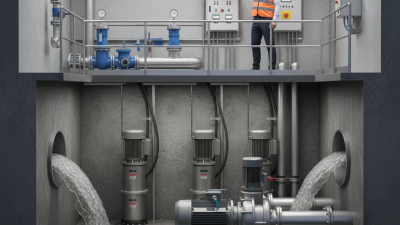
Choosing sewage pumps for a global project involves more than comparing flow rates and purchase prices. A pump may perform well in a municipal plant, yet struggle at a remote construction site. Local wastewater composition, voltage stability, climate, and maintenance skills can change the outcome. Small details matter.
This guide presents seven practical tips for evaluating sewage pumps with greater confidence. It examines flow and head requirements, solids-handling capacity, corrosion resistance, energy consumption, control systems, supplier experience, and after-sales support. Buyers should verify performance curves against real operating conditions. A pump rated for 100 cubic meters per hour may not deliver that flow through a long, undersized discharge line. That mistake is surprisingly common.
Reliable decisions also require documented evidence. Review factory test results, material specifications, warranty terms, spare-parts availability, and relevant regional certifications. Ask how the supplier supports commissioning across different time zones. Experienced engineers should inspect installation drawings and emergency procedures before shipment. Still, no selection method is perfect. Site data may be incomplete, and future wastewater loads can be difficult to predict. Leave room for adjustment.
The following seven tips offer a practical framework for reducing technical, financial, and operational risks. They are designed for contractors, consultants, distributors, and project owners managing sewage pumps across international locations. Good planning protects uptime. Guesswork does not.

Before comparing sewage pumps, define the actual duty point and site conditions. Record average, peak, and minimum inflow rates. The WHO/UNICEF Joint Monitoring Programme reported that 3.5 billion people lacked safely managed sanitation in 2022. That pressure makes reliable pumping essential. A generic flow estimate is not enough. Measure wet-well volume, inflow variation, discharge length, static lift, pipe diameter, and receiving conditions. Document solids, rags, grit, grease, and corrosive gases.
Select pump capacity from the measured duty point, not the catalog maximum. Calculate total dynamic head, including friction losses and future fouling allowance. Then check passage size against the largest expected solids. This prevents frequent clogging. UN-Water’s Progress on Wastewater Treatment 2024 Update reported that 42% of household wastewater was not safely treated in 2022. Many projects therefore need standby capacity, accessible lifting systems, and alarms that remain usable during outages. Local voltage, frequency, climate, and maintenance skills also change the specification.
Do not hide uncertainty. Early flow records may be incomplete, and imported assumptions can mislead. Use short-term logging, site inspections, and conservative scenarios before final selection. Test the pump with the planned control logic, check valve, and actual pipe route. A small static-head error can push operation outside the efficient range. Field experience also shows unexpected rags can defeat a technically correct selection. That detail is easy to miss.
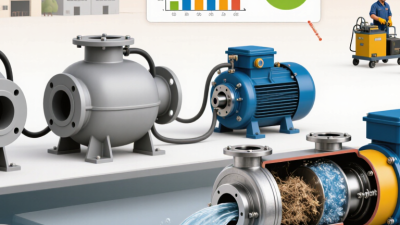
On global sewage projects, pump selection starts with the wastewater, not the catalog. Submersible pumps suit flooded wet wells and reduce installation space. Dry-pit centrifugal pumps allow easier inspection, but require reliable priming and ventilation. Grinder pumps handle fibrous solids, while vortex impellers reduce clogging risks. Neither option is universally better. Check solids size, flow variation, lifting height, and duty cycles before comparing prices. A 150-millimeter passage may matter more than a higher advertised head.
Material selection follows chemistry and abrasion. Cast iron works for ordinary sewage, but aggressive wastewater may require stainless steel or coated components. Impellers need close attention. Abrasion-resistant alloys help with sand, while corrosion-resistant materials handle industrial contaminants better. Elastomers also matter. A seal that performs well in clean water may fail quickly in grit-filled wastewater. Request documented compatibility data, not verbal assurances. I have been too optimistic about seals before.
Compare rated flow and total dynamic head at the actual operating point. Check motor efficiency, starting current, voltage, frequency, cable length, thermal protection, and noise. Variable-level wells need a stable pump curve, not only a maximum flow figure. Review passing diameter, duty and standby arrangements, and lifting access. For remote sites, sensors and spare seals can prevent long outages. A small mismatch becomes expensive. Use test reports, installation records, and local service capacity to verify performance claims.
Energy efficiency should be checked at the real duty point, not only in a sales brochure. Request pump curves, motor efficiency data, and power consumption at expected flow and head. A variable-speed drive may reduce energy use, but only when controls match actual demand. Compare wire-to-water efficiency across the full operating range. Small losses become expensive on continuous-duty systems.
Reliability depends on more than stainless steel or a large motor. Confirm solids-handling capacity, seal protection, dry-run tolerance, and thermal safeguards. Ask for documented factory testing and performance records. In field projects, voltage changes, flooding, and irregular inflow can expose weak designs. I have seen pumps selected perfectly on paper but struggle because the wet well collected rags and grit. Site conditions deserve honest attention.
Maintenance planning should begin before purchase. Check whether technicians can remove the pump without entering a confined space. Review lifting points, inspection access, spare-part availability, and service intervals. Local training matters. So do clear manuals in the project team’s working language. A low purchase price can hide costly downtime. A spreadsheet can still mislead. Leave room for seasonal flow changes, imperfect installation, and delayed parts. Reliability is partly engineered, but it is also maintained every week.
Buying sewage pumps for global projects requires more than comparing flow rates and prices. Start by mapping each destination’s electrical, safety, environmental, and installation requirements. Check voltage, frequency, enclosure protection, cable specifications, and approved materials. Ask which international or regional standards guide the design and testing. Do not accept a certificate as proof of complete compliance. Verify its issuing body, validity, product scope, and test conditions. Check the details.
Review the pump curve against actual site conditions, including discharge height, pipe length, solids size, and expected peak flow. Request factory test reports, material certificates, dimensional drawings, and maintenance instructions. Reliable suppliers should provide traceable serial numbers and clear document control. They should also explain deviations instead of hiding them. That honesty matters. Evaluate production capacity, quality inspections, spare-parts availability, and technical support across time zones. A supplier may have excellent pumps but weak installation support.
For remote projects, examine packaging, corrosion protection, delivery planning, and commissioning assistance. Ask whether technicians can support vibration checks, insulation testing, and control-panel setup. Clarify warranty procedures before signing a purchase order. In practice, small documentation gaps often delay customs clearance or installation. I have learned that attractive pricing can conceal expensive coordination work. A written responsibility matrix helps, although it will not solve every communication problem. Invite an independent engineer to review critical test results and local certification requirements before shipment.
| No. | Buying Tip | Key Assessment Dimension | Recommended Technical Benchmark | Documents or Evidence to Request | Why It Matters |
|---|---|---|---|---|---|
| 1 | Define the duty point before comparing prices | Flow rate, total dynamic head, solids passage, operating hours, and liquid characteristics | Specify flow in m³/h or L/s and head in metres; include static lift, friction losses, pipe fittings, minimum submergence, and peak-flow conditions. State the required free passage for solids. | Approved pump data sheet, system curve, performance curve, efficiency data, power requirement, and duty-point confirmation | A pump selected only by outlet diameter or motor power may fail to deliver the required flow or may operate inefficiently. |
| 2 | Check the applicable global and local standards | Performance testing, motor construction, ingress protection, electrical safety, and wastewater installation requirements | Use ISO 9906 for rotodynamic pump hydraulic acceptance testing where applicable; verify IEC 60034 requirements for rotating electrical machines and IEC 60529 ingress-protection classification. Apply local wastewater and electrical codes for the destination country. | Standards matrix, test procedures, certified test reports, motor data, IP-rating declaration, and country-specific compliance statement | A standard accepted in the manufacturing country may not satisfy the authority having jurisdiction at the project site. |
| 3 | Verify certifications instead of relying on logos | Validity, scope, issuing body, product coverage, and destination-market acceptance | Confirm whether the requirement concerns CE marking, UKCA, UL/CSA-related acceptance, IECEx or other hazardous-area approval, sanitary approval, or a national certification. Certification must match the exact pump model, motor, control panel, and intended application. | Certificate number, issue and expiry dates, scope of certification, conformity declaration, accredited-body details, and model-list verification | A valid certificate can still be irrelevant if it covers a different model, voltage, hazardous-area class, or market. |
| 4 | Match materials to the sewage and site environment | Corrosion, abrasion, temperature, chemical exposure, clogging, and seal compatibility | Evaluate casing, impeller, shaft, fasteners, elastomers, cable jacket, and mechanical seals as a complete material system. Consider chloride exposure, industrial chemicals, fibrous solids, sand, grease, and wastewater temperature. | Material certificates, chemical-resistance information, seal construction, temperature limits, solids-handling data, and corrosion assumptions | Incorrect material selection can cause premature seal leakage, impeller wear, corrosion, or unplanned shutdowns. |
| 5 | Assess electrical compatibility and controls | Voltage, frequency, phase, starting method, protection, instrumentation, and control-system interface | Confirm the local supply, such as 50 or 60 Hz and single- or three-phase power; check full-load current, starting current, thermal protection, moisture or leakage sensors, overload protection, and variable-frequency-drive compatibility. | Motor nameplate, wiring diagram, control-panel schematic, protection settings, sensor list, EMC information, and interface protocol | Electrical mismatches may damage the motor, create nuisance trips, or prevent integration with the site SCADA system. |
| 6 | Evaluate supplier engineering and project-delivery capability | Design support, quality control, testing, documentation, logistics, and experience with international project requirements | Prefer a supplier able to provide drawings, pump selection calculations, factory testing, inspection plans, export packing, multilingual documentation, and traceable serial-number records. | Organization and quality certificates, project references without confidential data, inspection and test plan, manufacturing schedule, quality records, and packing specification | Technical and documentation delays can affect installation, customs clearance, commissioning, and payment milestones. |
| 7 | Compare lifecycle cost and after-sales support | Energy consumption, maintenance intervals, spare parts, response time, warranty, and local service access | Compare total cost of ownership over the planned service period, including purchase, transport, installation, electricity, wear parts, seal replacement, lifting equipment, and disposal. Require clear warranty exclusions and spare-part availability. | Efficiency curve, annual operating-hours estimate, recommended spare-parts list, maintenance manual, warranty terms, service contacts, and response-time commitment | The lowest purchase price may result in higher energy, maintenance, downtime, and replacement costs. |
Buying a sewage pump for a global project requires more than comparing the quoted unit price. In field procurement, I have seen a low-cost pump become expensive after freight, import duties, installation changes, and emergency labor were added. Calculate the total cost over its expected service life. Include power consumption, routine maintenance, replacement seals, control panels, and disposal costs. Ask for test records and efficiency data, not just catalogue figures. Small details matter.
Delivery risk deserves equal attention. Confirm production time, inspection dates, packing standards, and shipping documents in writing. A pump delayed at a port can hold up an entire treatment system. Consider ordering critical spare parts with the equipment. Keep a realistic buffer. It is easy to underestimate delays.
Warranty terms should state coverage, response time, exclusions, and the process for returning failed components. Clarify whether labor, transport, and replacement parts are included. After-sales support must be practical, not merely promised. Check if technicians can provide remote troubleshooting and clear maintenance instructions. Ask how quickly common parts can be supplied to the installation country. One weakness remains: buyers often accept vague service language because the project schedule feels urgent. That decision may save days during purchasing, but cost weeks during operation. Review the supplier’s references, service records, and technical answers before signing. Reliability is demonstrated after delivery.
sale@harbertpump.com,
sale@harbertpump.com