
Choosing the best Biofilter For Water Treatment in 2026 is not a simple equipment decision. It depends on water quality, treatment goals, operating conditions, and available maintenance skills. A municipal plant may need a large biological aerated filter, while a small facility may perform better with a compact trickling filter or moving bed biofilm reactor.
The answer is not perfectly neat. Each system handles pollutants differently. Some biofilters reduce ammonia efficiently, while others focus on organic matter and suspended solids. Temperature also matters. Cold water can slow microbial activity, leaving operators with disappointing results. A reliable evaluation should examine removal performance, energy demand, media durability, hydraulic loading, cleaning needs, and long-term operating costs.
Practical experience often reveals details that product brochures miss. For example, clogged media can create uneven flow, unpleasant odors, and rising pressure across the filter. Operators should inspect the media surface, dissolved oxygen levels, and backwash frequency. Independent testing, documented performance data, and recognized water-quality standards can support a more trustworthy choice. However, laboratory results may not match field conditions exactly.
This guide compares leading biofilter technologies for 2026. It considers drinking water, wastewater, aquaculture, and industrial applications. The goal is not to promote one universal winner. Instead, it explains where each design performs well and where it may fail. A careful selection process protects water quality, budgets, and public confidence. Small details often decide success.
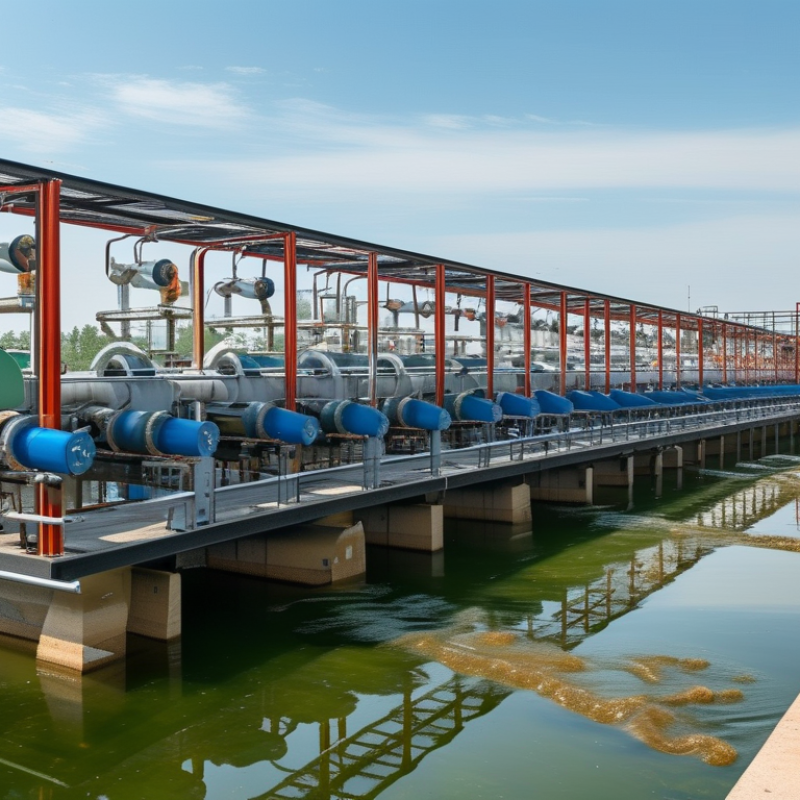
A biofilter is a water treatment unit filled with sand, granular media, or another porous material. A living biofilm grows across these surfaces. As water passes through, microorganisms consume biodegradable organic matter and convert ammonia through nitrification. The media also traps suspended particles and supports adsorption. It is not a magic sponge.
The WHO and UNICEF Joint Monitoring Programme 2023 report found that 2.2 billion people lacked safely managed drinking water in 2022. That gap makes reliable, low-energy treatment increasingly important. For many systems, a slow-sand or biologically active granular filter can reduce turbidity, organic compounds, and ammonia. Performance depends on temperature, flow, oxygen, media depth, and cleaning practices. Small details matter.
The best biofilter in 2026 is not automatically the fastest one. Operators should compare removal targets, footprint, maintenance, backwashing needs, and local water chemistry. The U.S. EPA’s 7th Drinking Water Infrastructure Needs Survey and Assessment estimated $625 billion in drinking-water infrastructure needs over 20 years. Cost control matters, but poor monitoring can create larger risks. Pilot testing should measure influent and effluent ammonia, turbidity, dissolved oxygen, and microbial indicators. Some designs look excellent on paper. Field conditions may disagree. A biofilter can also release unstable water quality after long shutdowns or sudden loading changes. Independent verification and trained operators remain essential.
Comparative guide to common biological filtration systems. Actual performance depends on water quality, temperature, loading rate, media depth, oxygen availability, and operating control.
| Biofilter type | How it treats water | Typical biological media | Main contaminants addressed | Oxygen requirement | Key advantages | Main limitations | Best practical use |
|---|---|---|---|---|---|---|---|
| Trickling filter | Wastewater is distributed over fixed media. A biofilm oxidizes biodegradable organic matter and, when sufficiently aerated, ammonia. | Rock, structured plastic modules, or high-surface-area plastic media | Biochemical oxygen demand (BOD), biodegradable dissolved organics, and ammonia with suitable design | Primarily passive or natural-draft air movement; forced ventilation may be added | Simple operation, relatively low energy demand, and good tolerance of variable hydraulic loading | Needs downstream solids separation; can produce odors or flies if poorly ventilated or overloaded | Municipal and decentralized secondary wastewater treatment |
| Moving-bed biofilm reactor (MBBR) | Suspended carriers move in an aerated tank while microorganisms grow on protected surfaces and consume pollutants. | Buoyant plastic carriers retained by screens | BOD, ammonia, and, in anoxic zones, nitrate through denitrification | Aerobic zones require continuous mixing and aeration; anoxic zones require oxygen limitation | Compact footprint, high biomass retention, and flexible capacity expansion | Requires aeration energy, carrier-retention screens, and effective downstream solids removal | Plants needing a compact upgrade or additional nitrification capacity |
| Biological aerated filter (BAF) | Water passes upward or downward through submerged granular media while air supports attached-growth treatment. | Granular mineral media, expanded clay, or engineered granular media | Suspended solids, BOD, ammonia, and sometimes nitrogen when separate aerobic and anoxic stages are provided | Controlled aeration is normally required | Combines biological treatment and filtration in a compact process | Head loss increases as solids accumulate; periodic backwashing and air supply are necessary | High-rate municipal treatment where land is limited |
| Slow sand biofilter | A biologically active surface layer, known as the schmutzdecke, works with fine sand to remove particles and microorganisms. | Fine sand supported by gravel | Turbidity, suspended particles, protozoa, bacteria, and some biodegradable organic matter | Generally relies on dissolved oxygen and does not normally need mechanical aeration | Low energy use, straightforward operation, and strong microbial removal when properly maintained | Large land requirement, slow filtration rate, and sensitivity to excessive turbidity or sudden chemical changes | Small-community drinking-water treatment after suitable pretreatment |
| Rapid sand biofilter | A granular filter removes particles while a mature biofilm can biologically oxidize ammonia and other biodegradable compounds. | Silica sand, dual-media layers, or other approved granular media | Suspended solids, turbidity, ammonia, iron, and manganese after appropriate oxidation and conditioning | Dissolved oxygen is important for nitrification; air or oxygen addition may be used upstream | Higher filtration rate and smaller footprint than slow sand filtration | Needs regular backwashing and careful control to avoid losing beneficial biomass | Drinking-water and industrial-water polishing after coagulation or oxidation |
| Submerged fixed-bed biofilter | Water flows through stationary submerged media covered by biofilm; aerobic, anoxic, or anaerobic zones can be configured. | Plastic modules, porous ceramic media, or granular media | BOD, ammonia, and nitrate when an anoxic stage with a carbon source is included | Depends on configuration; aerobic treatment requires aeration, while denitrification requires low dissolved oxygen | Stable attached biomass and effective treatment in a relatively compact tank | Media clogging and head loss can occur; backwashing or periodic cleaning may be needed | Decentralized wastewater systems and tertiary biological polishing |
| Constructed wetland biofilter | Water moves through planted gravel, sand, soil, and root zones where filtration, microbial conversion, plant uptake, and sedimentation occur. | Gravel, sand, soil, and plant-root-supported media | Suspended solids, BOD, nutrients, pathogens, and some metals depending on design | Varies by free-water, horizontal-subsurface, and vertical-flow configuration | Low mechanical complexity, ecological benefits, and relatively low energy demand | Large land area, seasonal variation, mosquito or odor risks if poorly designed, and slower response to load changes | Rural, decentralized, and nature-based wastewater treatment |
| Denitrifying biofilter | Anoxic microorganisms use nitrate as an electron acceptor and convert it primarily to nitrogen gas. | Granular media, fixed plastic media, or biologically active carbon-based media | Nitrate and oxidized nitrogen compounds | Low dissolved oxygen; an appropriate biodegradable carbon source is commonly required | Directly targets nitrate and can be added as a polishing stage | Requires careful control of carbon dosing, alkalinity, oxygen, and residual solids | Advanced wastewater treatment where nitrogen discharge limits apply |
sale@harbertpump.com,
sale@harbertpump.com,
sale@harbertpump.com,
sale@harbertpump.com,
sale@harbertpump.com