
Choosing an Aluminum Extrusion Profile supplier is not just a price comparison. A profile may look precise on a drawing, yet arrive with inconsistent wall thickness, rough cut ends, or a finish that varies under workshop lighting. Small differences matter when parts must slide together, support a load, or meet a tight assembly schedule.
Quality pioneer W. Edwards Deming wrote, “Quality comes not from inspection, but from improvement of the production process.” That principle is useful when comparing extrusion suppliers. Ask how each company controls alloy and temper, die design, dimensional tolerances, surface treatment, and inspection records. Request sample profiles, material certificates, and clear answers about production capacity. A polished website is not proof.
This guide to the 10 Best Aluminum Extrusion Profile Suppliers in 2026 will help buyers assess manufacturers using practical criteria: product range, technical support, customization, lead times, quality systems, and service after delivery. Some suppliers excel at complex, custom sections; others may be better suited to standard profiles and larger orders. There is no perfect fit for every project. And published capabilities can change, so verify important details directly before committing.
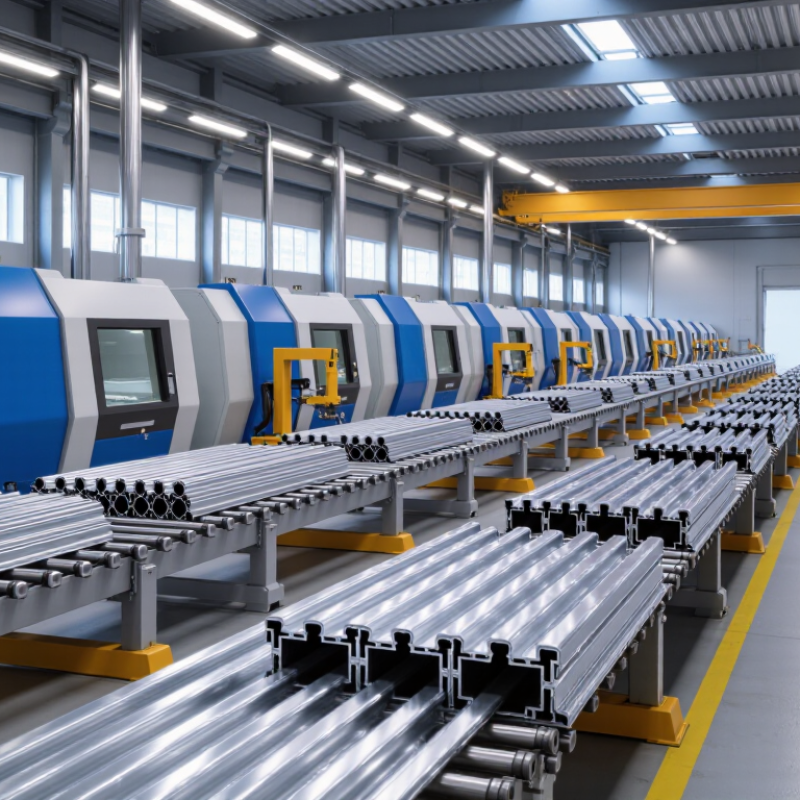
Aluminum extrusion profiles are made by pressing a heated billet through a shaped die. The process creates a consistent cross-section, from a simple solid bar to a hollow channel with several internal webs. These shapes can reduce weight while providing room for fasteners, wiring, or sliding components.
Small details matter. A narrow slot may simplify assembly, but it can also make cleaning or machining harder.
Applications range from window frames and equipment guards to solar mounting rails and electronic heat sinks. The right profile depends on loads, environment, finish, and how parts will be joined. For example, a long rail may need adequate stiffness to limit bending, while a heat sink benefits from fins that expose more surface area to airflow.
Alloy and temper also affect strength, formability, and corrosion behavior, so a drawing alone may not tell the whole story. In practice, teams should review tolerances, wall thickness, and connection points with the intended use in mind. A design that looks efficient on screen can prove awkward to assemble.
That deserves a second look.
Evaluating aluminum extrusion suppliers starts with the part, not the sales brochure. Share a drawing that shows dimensions, alloy, temper, finish, and expected use. Then ask how the supplier checks critical tolerances during production. A sample profile can reveal sharp edges, uneven walls, or surface marks that a catalog photo hides. Small variations matter. They can affect assembly, sealing, and fit.
Ask for evidence of process control, such as inspection records, material traceability, and documented quality procedures. Confirm that the supplier can explain how it manages die design, press capacity, and finishing steps for your profile. Request sample test reports when mechanical properties or coating performance are important. Ask for proof. A polished presentation is not the same as consistent production, and one good sample cannot guarantee every shipment.
Compare lead times against actual tooling and production schedules, not just an optimistic estimate. Clarify minimum order quantities, packaging, shipping protection, and how defects are handled. If possible, visit the facility or review a live production sample with an engineer. I have learned that supplier comparisons can be less tidy than a scorecard suggests. Price and capacity are easy to list; communication during a tooling change is harder to measure, but worth discussing.
A useful 2026 comparison of aluminum extrusion profile suppliers should look beyond catalogue size. Check whether each supplier can explain alloy and temper choices, profile tolerances, and the limits of its finishing options. Ask for a drawing review before tooling begins. A small mismatch around a screw channel or gasket slot can complicate assembly later. Request sample sections and inspect corners, wall thickness, and surface consistency under ordinary workshop lighting. Details matter.
The strongest candidates provide clear inspection records, realistic lead times, and direct answers about tooling ownership and revision costs. Compare quotes using the same alloy, finish, order quantity, and packaging requirements; otherwise, a low price may hide missing services. Ask how defects are documented and handled, too. A polished website is not evidence of dependable production. One awkward point: published tolerance figures can still be hard to compare unless suppliers state how and where measurements are taken.
Tips: Send a dimensioned drawing, expected annual volume, finish requirements, and intended use with your inquiry. Ask for a first-article sample before approving a larger run. Check that packaging protects long profiles from rubbing and bending during transit. Keep a written record of agreed specifications. Even then, supplier rankings are project-dependent; a capable source for simple channels may not suit a complex, tight-tolerance section.
Tensile strength is one useful specification to discuss when evaluating extrusion suppliers. The values shown are typical minimum tensile strengths for the listed alloy tempers; actual requirements depend on the applicable standard, product form, and specification. They are alloy benchmarks, not supplier ratings.
A useful 2026 supplier comparison should look beyond quoted price. The International Aluminium Institute reported 72.8 million tonnes of global primary aluminium production in 2024, highlighting the scale of the industry and the need for disciplined sourcing. Yet a large output does not prove that a supplier can hold a tight extrusion tolerance. Ask for sample inspection records, alloy traceability, and documented control of die changes. Small details matter.
Compare certifications against your application. ISO 9001 supports quality management, while IATF 16949 may be relevant for automotive programs; neither replaces checking the supplier’s actual process records. For each candidate, review press capacity, profile size limits, surface-finishing options, machining, packaging, and realistic lead times. Ask how defects are reported and corrected. A certificate is a starting point, not a guarantee. I would also question vague claims about “custom capability”; the answer should include a specific example and measurable acceptance criteria.
Tips: Send every supplier the same drawing, alloy, temper, tolerance, finish, and annual volume. Request a first-article inspection report and a clear list of included services. Compare landed cost, not just the extrusion price. Be cautious: a beautifully polished quotation can still leave important assumptions unstated.
Choosing an aluminum extrusion supplier starts with the part, not the price list. Share a clear drawing, alloy requirements, temper, dimensions, and expected order volume. Ask how the supplier controls die design, extrusion tolerances, straightness, and surface finish. A profile that looks simple on screen may twist after cutting or show marks under a bright interior light. Request sample pieces and inspection records before approving production. Small checks can prevent expensive rework.
Then compare what happens beyond the press. Can the supplier cut, drill, machine, or apply the finish your project needs? Confirm packaging, lead times, minimum order quantities, and how defects are handled. Ask for a realistic production schedule, not only the best-case estimate. A responsive technical contact is useful when a drawing changes mid-project. That matters. One detail buyers sometimes overlook is consistency between sample and bulk production. Ask how dimensions are measured and how often checks occur. Price still counts, of course, but the cheapest quote may exclude tooling, finishing, or careful packing. I would not assume every supplier explains these costs equally clearly. Read the quotation line by line, and note anything that remains uncertain.
Supplier-selection checklist — compare suppliers against your project requirements; this is not a company ranking.
| No. | Evaluation dimension | What to check | Evidence to request |
|---|---|---|---|
| 1 | Alloy and temper capability | Confirm the supplier can produce the alloy and temper specified for the required strength, formability, corrosion resistance, and application. | Alloy and temper options, material certificates, and confirmation against the drawing or purchase specification. |
| 2 | Profile and press suitability | Check that the supplier’s equipment can accommodate the profile’s cross-section, wall thickness, shape complexity, and required length. | A feasibility review based on the drawing, including any design changes needed for extrusion. |
| 3 | Dimensional tolerances | Ensure tolerances are defined for critical dimensions, straightness, twist, and cut length, with a cited standard or drawing requirement. | A quotation or control plan that identifies the applicable tolerance requirements, such as ASTM B221 or EN 755-9 where relevant. |
| 4 | Tooling and die management | Clarify die design and approval, ownership, storage, maintenance, repair, and replacement terms before placing an order. | Written tooling terms, a die quotation, and the process for reviewing first-off samples. |
| 5 | Finishing and secondary operations | Check availability and control of required operations, such as anodizing, powder coating, machining, drilling, or fabrication. | Process specifications, finish samples or approved standards, and inspection criteria for finished parts. |
| 6 | Quality management and inspection | Review how incoming material, production, and final inspection are controlled, and whether the quality system fits your industry. | Relevant quality-system certificates, inspection plans, sample reports, and corrective-action procedures. |
| 7 | Testing and material traceability | Confirm that test results and production records can be linked to the supplied batch or lot. | Example material test certificates, lot-identification method, and details of in-house or accredited external testing. |
| 8 | Order quantity and production lead time | Compare minimum order quantities, sample timing, production scheduling, and replenishment lead times for your order pattern. | A project-specific quotation that separates tooling, sampling, production, and delivery timing. |
| 9 | Packaging and transport | Agree on packaging that protects profiles and finishes from scratching, bending, moisture, and handling damage during transit. | Packaging specifications, shipment dimensions, delivery terms, and a process for handling transit damage. |
| 10 | Communication and commercial terms | Assess technical response quality, quotation clarity, change control, payment terms, and support for nonconforming product. | Named project contacts, documented terms, drawing-revision controls, and a clear returns or claims procedure. |
Note: Applicable standards and certification requirements depend on the product, market, and end use. Confirm the required standard, revision, and acceptance criteria in the contract documents.
sale@harbertpump.com,
sale@harbertpump.com