Choosing the best Potassium Sulfate in 2026 requires more than comparing price per ton. Global buyers must examine purity, particle size, chloride content, production route, packaging, and delivery reliability. The right specification for greenhouse tomatoes may differ from one for tobacco, potatoes, or export-oriented fruit farms.
The International Fertilizer Association’s Fertilizer Outlook 2024–2028 indicates continued growth in global fertilizer demand. Its data also highlights potassium’s importance in intensive crop production and yield protection. The U.S. Geological Survey’s Mineral Commodity Summaries 2025 reports global potash production above 70 million metric tons in 2024, although most potash remains chloride-based. This matters because Potassium Sulfate supplies potassium without adding chloride. It can support chloride-sensitive crops and controlled-environment agriculture.
Dr. Ismail Cakmak, a widely cited plant nutrition expert, has stated that “potassium is very important for plants, especially under stress conditions.” His observation remains practical for buyers facing drought, salinity, and irregular weather. However, no universal “best” type exists. Mannheim-produced material often offers consistent industrial supply, while sulfate from alternative processes may require closer impurity checks. Crystalline grades dissolve quickly. Granular grades suit field application.
Small details matter. A damp bag can hide caking and uneven spreading. Buyers should request independent certificates for K2O, sulfur, chloride, moisture, heavy metals, and particle distribution. Supplier claims are not enough. Reported market figures also vary by methodology, region, and product definition. That uncertainty deserves attention. A reliable 2026 purchasing decision should combine laboratory evidence, crop experience, and verified logistics rather than chasing the lowest quotation.
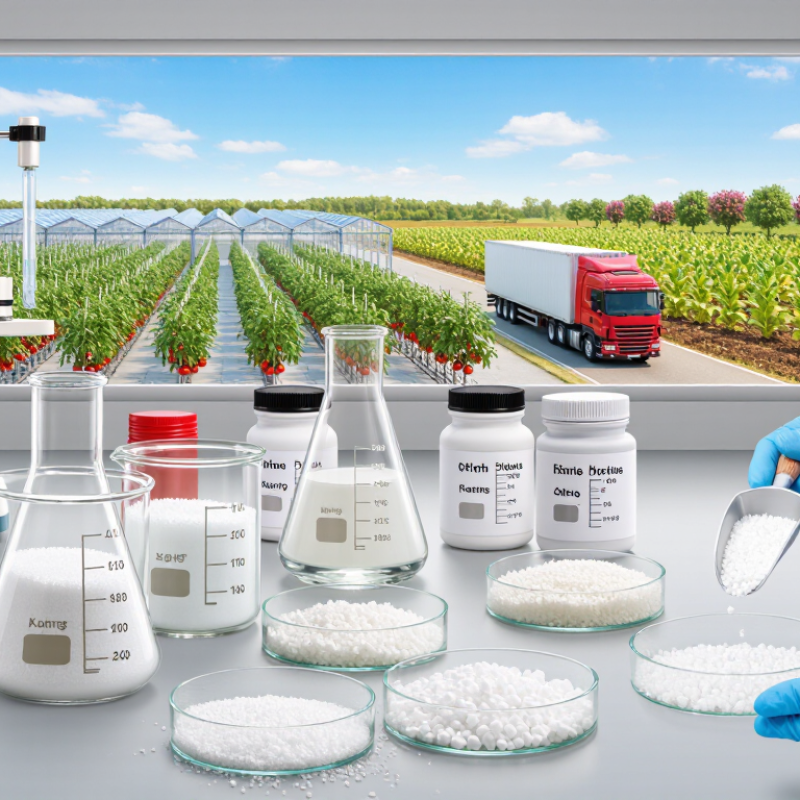
For global buyers, SOP quality starts with the grade, not the bag. Commercial potassium sulfate usually contains 50–52% K₂O and 17–18% sulfur. Pure K₂SO₄ calculates near 54% K₂O and 18.4% sulfur, but real products include moisture and minor mineral residues. The International Fertilizer Association’s Medium-Term Fertilizer Outlook 2024–2028 tracks fertilizer demand by nutrient content, while USGS Mineral Commodity Summaries 2025 reports potash using K₂O equivalent. These conventions make supplier comparisons easier.
A 52% K₂O grade suits buyers seeking concentrated potassium with limited application volume. A 50% grade may still perform well, if its assay is stable and moisture remains controlled. Check the certificate of analysis, not only the headline number. Ask for water-soluble potassium, sulfur, chloride, moisture, particle-size distribution, and insoluble matter. Granules should move evenly through a spreader. Powdery material can bridge inside a hopper.
Low chloride is important for chloride-sensitive crops and protected cultivation. However, “low chloride” needs a measured value. Some purchasing decisions rely too heavily on K₂O alone. That is a weakness. Storage conditions also matter, especially in humid ports where caking can develop. Independent laboratory testing before shipment is prudent, although it adds cost and time. Grade selection should match crop sensitivity, application equipment, soil testing, and delivered cost per unit of K₂O and sulfur.
For chloride-sensitive crops, potassium sulfate with Cl⁻ below 1.5% deserves careful attention. This limit equals 15,000 mg/kg of chloride. At an application rate of 300 kg per hectare, it could add 4.5 kg of chloride. The amount may matter in greenhouse beds, sandy soils, and areas with limited rainfall. FAO Irrigation and Drainage Paper 29 identifies chloride as a crop-specific toxicity risk under saline conditions. Potatoes, tobacco, fruits, and some vegetables can show stronger sensitivity.
Standard potassium sulfate usually contains about 50–52% K₂O and 17–18% sulfur. IFA’s Medium-Term Fertilizer Outlook 2024–2028 places global potash demand near 40 million tonnes of K₂O annually. That scale increases the need for consistent product testing.
Buyers should request a recent certificate of analysis, not only a product brochure. Check whether chloride is reported on a dry basis, water-soluble basis, or another method. These details can change the purchasing decision.
Tips: Ask for independent batch testing before shipment. Compare chloride, K₂O, sulfur, moisture, and particle size together. A low chloride result is helpful, but it is not the whole answer. I would also inspect storage conditions. Damp granules can bridge, segregate, and distribute nutrients unevenly. That practical risk is often underestimated.
For global buyers in 2026, granular potassium sulfate should match the application system, not only the laboratory certificate. A 2–4 mm particle range suits many broadcast spreaders and blended fertilizer lines. It supports steadier flow across conveyor belts, hoppers, and field discs. The International Fertilizer Association projects global fertilizer demand to approach 205 million tonnes of nutrients by 2027/28. That growth increases pressure on handling consistency.
Particle shape matters too. Rounded granules usually roll more evenly, while excessive fines can create dust and uneven discharge. Ask for sieve analysis, moisture data, crushing strength, and chloride content. Keep moisture low. Wet granules bridge inside bins, especially after long sea transport. The Food and Agriculture Organization emphasizes nutrient efficiency and site-specific fertilizer management in its fertilizer use guidance. A practical test remains necessary: run a sample through the buyer’s actual spreader at working speed, then inspect the application pattern.
The fit is not perfect.
A 2–4 mm specification may still segregate during loading or blending. Different densities can separate even when particle sizes appear similar. Buyers should repeat testing after transport, not only before shipment. This small step often reveals weak granules, excess powder, or caking that a certificate misses. Reliable SOP purchasing therefore combines chemical analysis, physical screening, and field observation.
For fertigation, water-soluble potassium sulfate is usually the more practical choice. A useful screening point is solubility above 100 g/L. However, the test temperature must be stated clearly. Solubility at 20°C may differ greatly from results at warmer temperatures. Ask for a recent laboratory report, not only a technical brochure. Check potassium content, sulfate content, moisture, and insoluble residue. Small differences can affect stock-tank performance.
In the field, the real test begins inside the mixing tank. Add the fertilizer gradually, using clean water and steady agitation. Watch for sediment after 30 to 60 minutes. A clear solution protects filters and reduces uneven delivery through drip lines.
The fertilizer should also maintain consistent quality across shipments. A low-chloride profile may matter for chloride-sensitive crops, but buyers should verify the actual specification. Do not assume every granular product dissolves well.
One detail is often missed.
Fertigation programs need more than a high solubility number. Compare solution temperature, water hardness, tank concentration, and compatibility with calcium fertilizers. Jar testing can reveal unexpected precipitation before it reaches the field. I would also review batch-to-batch results, because one excellent sample does not prove stable supply. In some cases, 100 g/L is only a starting point, not a guarantee of trouble-free application. Local agronomists and irrigation technicians should confirm the final rate for each crop and system.
For global buyers, potassium sulfate selection starts with a measurable moisture limit. Ask for moisture below 1.5% on the latest batch certificate. High moisture can cause caking, poor flow, and uneven dosing. A dry-looking bag is not proof.
Request a representative sample before shipment. Check moisture through an independent laboratory when the order is significant. Compare the supplier’s method, sampling date, and batch number.
Also inspect particle size, potassium content, sulfate content, and visible impurities. Packaging matters too. Torn bags or weak inner liners can increase moisture during long transport. Small details matter.
Crop compatibility requires equal attention. Potassium sulfate suits many chloride-sensitive crops, including tobacco, potatoes, fruits, and selected vegetables. Yet soil tests, irrigation quality, and application rate can change the recommendation.
Confirm whether the product dissolves well enough for your fertigation equipment. Granular material may perform differently from water-soluble grades.
I once treated a passing moisture result as a complete quality verdict. That was too narrow. A product can meet the moisture target but still mismatch the crop, soil, or delivery system. Ask for field-use guidance, recent test reports, and traceable batch records before approving a purchase.
sale@harbertpump.com,
sale@harbertpump.com