Choosing an Aluminum Drawing Machine in 2026 requires more than comparing catalog prices. The right equipment must match alloy type, wire diameter, production speed, and finished-surface expectations. A machine drawing 2.5-millimeter aluminum wire needs different control settings from one processing larger conductors. Motor capacity, die design, cooling performance, tension stability, and automation directly affect output quality. Small details matter.
This guide examines these decisions from a practical purchasing perspective. It considers machine structure, energy consumption, maintenance access, safety features, spare-part availability, and supplier support. Experienced buyers should request trial-drawing results, not only attractive brochures. Ask for actual data on speed stability, diameter tolerance, surface marks, and power use under continuous operation. A clean sample coil can reveal more than a long specification sheet.
Reliable manufacturers should explain installation requirements, operator training, warranty coverage, and response times. Their technical documents should identify compatible dies, lubricants, sensors, and replacement components. Independent certifications and documented factory testing also deserve careful review. However, no single Aluminum Drawing Machine suits every workshop. Production forecasts may change, and quoted efficiency figures can look optimistic under real factory conditions. That uncertainty matters.
This buying guide aims to support a balanced decision. It highlights useful comparisons without pretending that every answer is universal. Readers should verify specifications with their engineers and test materials before signing an order. Better questions usually lead to better equipment. Pricing matters, but dependable production matters more.
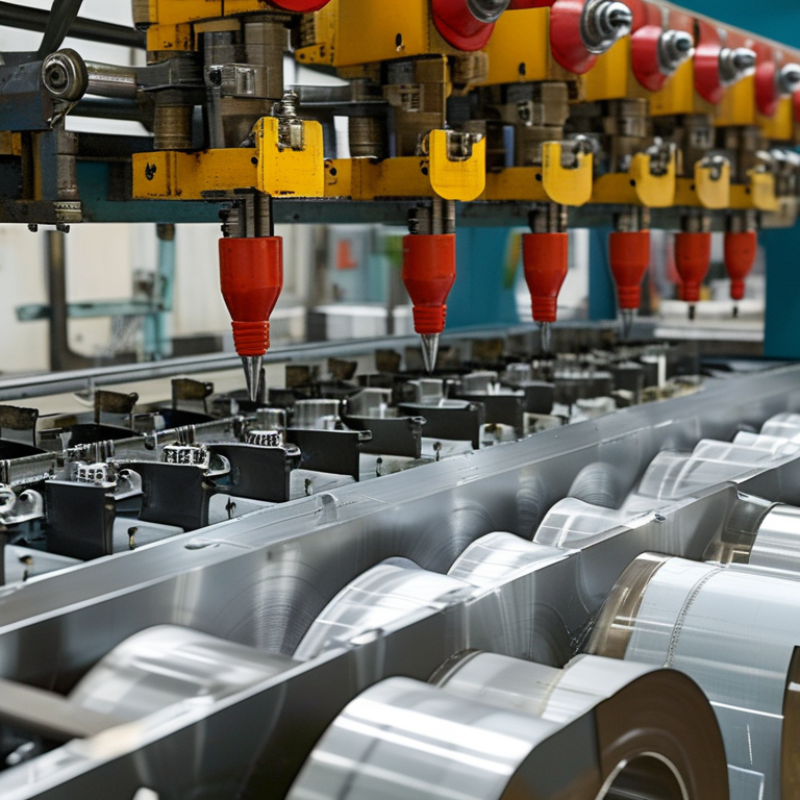
An aluminum drawing machine is industrial equipment that reduces aluminum rod or wire diameter through controlled pulling. The material passes through a hardened die, where pressure reshapes its cross-section. Each pass removes a small amount of material. This gradual process improves dimensional accuracy and surface consistency.
A typical machine includes a payoff unit, drawing dies, capstans, a take-up system, and cooling equipment. Lubrication matters. Without stable lubrication, friction can create scratches, heat, and premature die wear. In practical shop-floor evaluations, operators also monitor tension, line speed, and outlet temperature. Small changes can affect elongation and electrical performance. The machine may look simple, but adjustment requires experience.
For a 2026 buying decision, check the compatible rod diameter, drawing speed, motor control, and die-changing method. Drawing speed alone misleads. A faster line can produce more defects if cooling or tension control is weak. Inspect the frame for vibration, especially near the capstan. Ask the supplier for production data, maintenance intervals, noise levels, and sample-drawing results. Request a trial with your actual aluminum grade. Some specifications sound impressive on paper, yet fail under continuous operation. That assumption can be costly. I would also record energy use during a full shift, because laboratory figures rarely match a busy production floor.
2026 Best Aluminum Drawing Machine Buying Guide?
How Aluminum Drawing Machines Work
An aluminum drawing machine reduces rod diameter by pulling it through a hardened die. The die applies compressive force while the capstan maintains controlled tension. Each pass removes a small amount of material. Excessive reduction can cause cracks, scratches, or uneven dimensions.
Before drawing, the rod usually passes through a payoff unit and a cleaning section. Lubricant then reduces friction and carries heat away from the die. Cooling matters. Aluminum transfers heat quickly, yet poor lubrication can still create surface tearing. After drawing, a take-up system winds the finished wire under steady tension.
In practical machine checks, I measure diameter at several points, not only near the coil end. A stable reading can hide problems between passes. Laser gauges help, but operators should still verify calibration with a trusted micrometer. Servo control improves speed accuracy and reduces tension changes during acceleration. Annealing may restore ductility when the process requires softer aluminum after heavy reduction.
A quiet machine is not automatically a good machine. Vibration may remain hidden at low speed. I would inspect die alignment, bearing temperature, emergency stops, and guarding before comparing output rates. Energy use, maintenance access, and spare die compatibility also affect long-term cost. The buying decision can feel straightforward, but real performance depends on matching the machine to alloy, diameter range, pass schedule, and required surface quality.
2026 Best Aluminum Drawing Machine Buying Guide: Key Types and Specifications to Compare
Aluminum demand remains substantial. The USGS Mineral Commodity Summaries 2025 estimates 2024 global aluminum smelter output at about 72 million metric tons. That scale makes machine selection more than a price decision. It affects wire quality, energy use, and maintenance hours.
Choose a single-block machine for flexible production and easier setup. Multi-block machines suit higher output and stable wire sizes. Wet drawing systems provide stronger cooling and lubrication for fine aluminum wire. Bull-block designs handle larger reductions, but they require careful tension control. Compare inlet and outlet diameters, reduction per pass, capstan speed, motor torque, die cooling, and take-up accuracy. A practical trial should measure ovality, surface scratches, wire breakage, and temperature after continuous running. Catalog speed can look impressive. Real production may disagree.
Tips: Ask for a sample run using your actual alloy and die sequence. Check whether the control system records tension, speed, alarms, and energy consumption. The International Aluminium Institute reports that recycling aluminum uses roughly 95% less energy than primary production, so efficient scrap handling deserves attention. Also inspect lubrication access and die-change time. A cheap machine can become expensive when operators lose hours each shift. I would not trust a specification sheet alone; noise, vibration, and unstable take-up tension often appear only during testing.
| Machine Type | Typical Aluminum Products | Typical Inlet Diameter | Typical Outlet Diameter | Typical Number of Passes | Typical Line Speed | Main Strengths | Key Limitations |
|---|---|---|---|---|---|---|---|
| Single-Block Drawing Machine | General-purpose aluminum wire and small profiles | Approximately 6–12 mm | Approximately 1.5–6 mm | 1 | Approximately 100–600 m/min | Simple layout, lower initial cost, easy die changes | Lower productivity for multi-pass reduction; more manual handling |
| Multi-Block In-Line Drawing Machine | Fine aluminum wire, conductor wire, and cable wire | Approximately 6–12 mm | Approximately 0.15–3 mm | 4–12 | Approximately 600–1,800 m/min | High throughput, continuous operation, consistent diameter control | Higher investment, more complex synchronization and maintenance |
| Wet Drawing Machine | Fine wire requiring strong cooling and surface protection | Approximately 1–5 mm | Approximately 0.05–1.5 mm | 6–15 | Approximately 800–2,500 m/min | Effective heat removal, improved die life, suitable for fine wire | Requires coolant filtration, drying, and fluid management |
| Dry Drawing Machine | Medium and coarse aluminum wire or rod | Approximately 6–14 mm | Approximately 1–6 mm | 1–8 | Approximately 100–800 m/min | Cleaner installation, no liquid coolant system, simpler operation | More sensitive to heat buildup and lubrication quality at high speeds |
| Bull Block Drawing Machine | Large aluminum rod, tube, and heavy-gauge wire | Approximately 10–25 mm | Approximately 3–12 mm | 1–4 | Approximately 50–400 m/min | High pulling force, robust construction, suitable for large reductions | Large footprint, higher energy demand, slower than fine-wire lines |
| Tubular or Profile Drawing Machine | Aluminum tubes, hollow sections, and shaped profiles | Approximately 10–80 mm outside diameter | Approximately 5–70 mm outside diameter | 1–6 | Approximately 10–150 m/min | Controls outside dimensions, wall thickness, and profile geometry | Requires specialized tooling, alignment, and dimensional setup |
| Specification | Why It Matters | Practical Selection Guidance |
|---|---|---|
| Material Grade Compatibility | Different aluminum alloys have different strength, ductility, and lubrication requirements. | Confirm compatibility with the exact alloy, temper, and incoming material condition. |
| Maximum Drawing Force | Insufficient force can cause unstable drawing, wire breaks, or overloads. | Choose capacity above the calculated peak force, including a reasonable operating margin. |
| Motor Power and Drive Control | Power and speed control affect productivity, tension stability, and energy use. | Prefer coordinated digital drives with adjustable speed and overload protection. |
| Die Size and Die Material | Die geometry and wear directly influence surface finish, diameter accuracy, and scrap. | Check die range, included angles, replacement availability, and suitability for aluminum. |
| Cooling and Lubrication System | Proper cooling and lubrication reduce friction, heat, die wear, and surface defects. | Evaluate coolant flow, filtration, temperature control, leak protection, and maintenance access. |
| Dimensional Accuracy | Stable diameter and ovality are essential for downstream stranding, cabling, or assembly. | Request measured tolerance data based on the target diameter and production speed. |
| Automation and Monitoring | Sensors and alarms help prevent breaks, overloads, speed mismatch, and quality deviations. | Consider PLC control, HMI data logging, tension monitoring, fault alarms, and remote diagnostics. |
| Safety Features | Rotating blocks, capstans, and take-up systems create significant mechanical hazards. | Verify guarding, emergency stops, interlocks, safe access, and compliance with applicable regulations. |
| Energy Consumption | Motor efficiency and regenerative control influence long-term operating cost. | Compare power per production rate rather than motor rating alone. |
| Installation and Service Requirements | Foundation, utilities, spare parts, and technical support affect commissioning time and uptime. | Confirm total floor space, electrical load, compressed air, cooling water, training, and spare-parts support. |
Note: Performance ranges are indicative industry ranges. Actual values depend on aluminum alloy, inlet and outlet dimensions, reduction schedule, die design, lubrication, cooling, and required surface quality.
Choosing an aluminum drawing machine starts with your product, not the advertised line speed. Define alloy grades, rod diameter, final wire size, reduction per pass, and required surface finish. World Aluminium’s 2024 Primary Aluminium Production report recorded roughly 73 million tonnes of global output. That scale increases pressure for stable, repeatable processing.
Match the machine’s die range and capstan size to your actual orders. A small-diameter wire may need tighter tension control and better cooling. Larger reductions demand stronger frames and carefully calculated pass schedules. Ask for measured tolerances, not attractive promises. Check straightness, ovality, scrap rates, changeover time, and accessible maintenance points. A machine that looks fast may become expensive during frequent die changes.
Energy deserves serious attention. The International Energy Agency reports that industry uses about 37% of global final energy. Compare motor efficiency, standby consumption, cooling demand, and regenerative options. Request test data under your expected load, not empty running. I would not choose the highest speed automatically. Faster production can increase breakage and surface defects. A first-pass spreadsheet can still mislead. Include operator training, spare-part availability, control-system access, and safety verification. If suppliers avoid these details, keep looking.
2026 Best Aluminum Drawing Machine Buying Guide?
Selecting a 2026 aluminum drawing machine starts with installation discipline, not catalog speed. The frame needs a level foundation, controlled bolt torque, and verified alignment. Keep die boxes, capstans, and take-up units on one centerline. A small offset can increase die wear and surface scratching. Electrical work should follow local codes and approved schematics. Use guarded cable routes, a tested emergency stop, and clearly labeled isolation points. Do not improvise here.
During commissioning, run clean aluminum rod at reduced speed. Check tension, coolant flow, lubrication pressure, and motor temperature every 15 minutes. Record readings before increasing speed. The U.S. Department of Energy reports that compressed-air leaks may waste 20–30% of compressor output. Therefore, inspect fittings, valves, and pneumatic seals during acceptance testing. Drawing force should remain stable. Rising force often signals poor lubrication, misalignment, or a damaged die. Operators need training on threading, emergency stopping, and restart checks. A rushed first shift can teach bad habits.
Build maintenance around actual load, not only calendar dates. Inspect dies for scoring, measure wire diameter, and sample surface roughness. Check bearings, belts, cooling filters, and electrical terminals weekly. ISO 20816 provides a framework for evaluating machine vibration. The DOE’s Operations & Maintenance Best Practices guide identifies potential energy savings of 5–20% through effective maintenance. That figure is not a promise. Aluminum dust, coolant contamination, and unstable water temperature can defeat a neat schedule. Keep records of speed, alloy, die condition, and corrective action. The first plan will probably need revision.
sale@harbertpump.com,
sale@harbertpump.com